
How to assess denim leg twist after washing: samples, methods and acceptance
A twisted seam needs more than a photograph. Use a consistent sample record, distinguish fabric skew from garment twist, and agree on test and acceptance conditions before approving jeans.
A twisted seam needs more than a photograph. Use a consistent sample record, distinguish fabric skew from garment twist, and agree on test and acceptance conditions before approving jeans.
In this article
Describe exactly where the change appearsDistinguish fabric skew from garment twistAdd these fields to the sample recordResolve disagreements by finding the missing evidenceWhat to include in a ZHIZHI development brief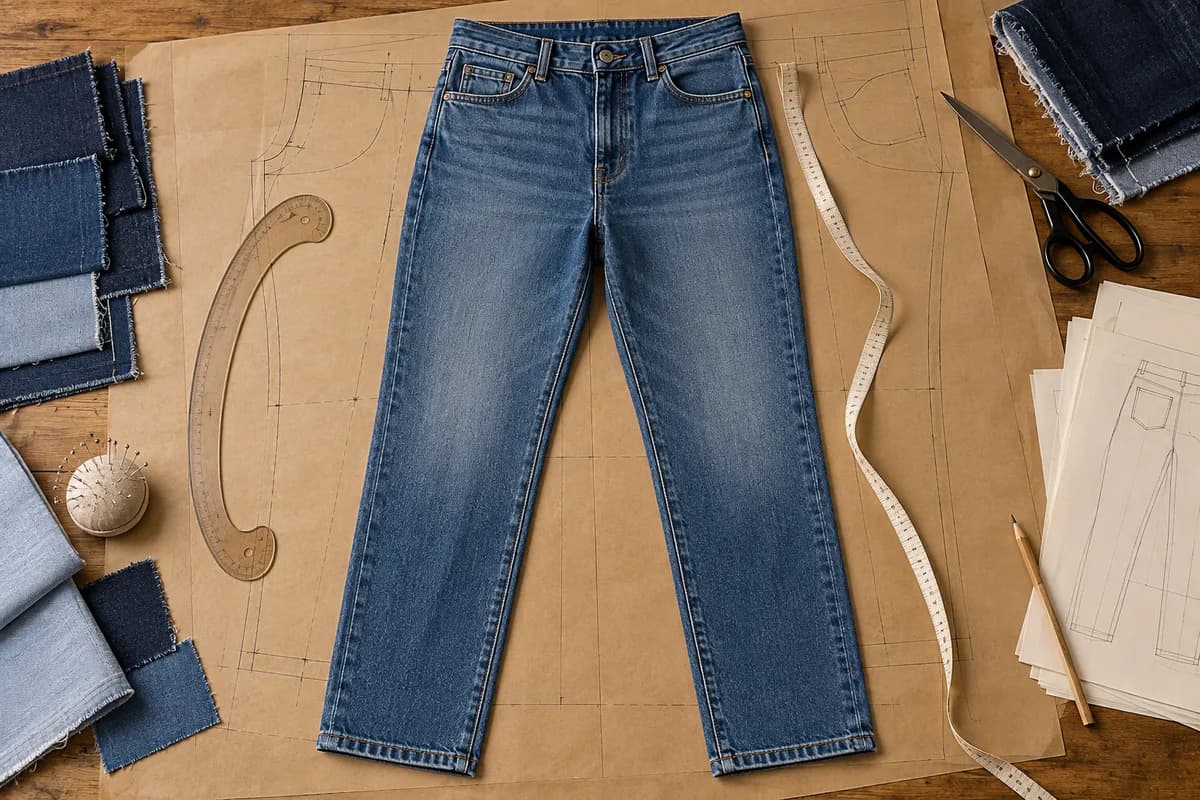
When a jeans seam rotates toward the front or back after washing, a buyer needs more than an assurance that this is normal. Record which sample and leg are involved, their condition before washing, the washing procedure and the observed change. Compare those records with agreed acceptance criteria before accepting the sample, requesting another test or revising development.
This guide is a submission and communication checklist. The cover illustrates pattern development; it is not a test record. References to standards help identify the test object and do not establish test results for ZHIZHI products.
Describe exactly where the change appears
“The leg is twisted” is not a sufficiently specific observation. Photograph the front, back and sides of both legs on the same sample, keeping the waistband and hems visible. Identify the outseam, inseam or other reference position being assessed. Do not pull or rotate the leg to make the seam look straight. Worn photographs can support an appearance assessment, but keep them separate from flat-lay records.
Identify the sample stage: after production washing but before domestic laundering, or after an agreed home-laundering procedure. The production finish and changes during consumer use need separate records. A post-wash photograph alone does not establish where a change occurred.
Distinguish fabric skew from garment twist
AATCC lists TM179 for fabric skew change after home laundering and TM207 for garment seam twist before and after home laundering. Their named subjects differ. Check whether a fabric report actually addresses the garment issue instead of relying on similar terminology. Source: AATCC official test-method directory, accessed November 25, 2026.
ISO 16322-3:2021 concerns spirality in woven and knitted garments after domestic laundering. Its public abstract notes that results from different procedures may not be comparable. Before comparing suppliers' percentages, ask the laboratory whether the procedures and result definitions match. Source: ISO 16322-3:2021 scope and abstract, accessed November 25, 2026.
A suitably capable laboratory should confirm sampling, operation, calculations and reporting against the applicable full method and edition. This checklist does not replace that method or establish a universal passing percentage for jeans.
Add these fields to the sample record
- Sample identity: style, colour or wash code, size, sample revision and fabric batch. Identify material or wash changes without overwriting earlier records.
- Pre-wash baseline: processing state, photographs of both legs, reference positions and any existing visible rotation.
- Test agreement: method and edition, laboratory-confirmed washing and drying procedure, number of cycles, sampling and measurement approach. “Normal machine wash” is insufficient.
- Post-wash findings: record both legs using the same reference positions, with photographs. Keep measurements, appearance descriptions and wearing comments separate.
- Acceptance: buyer, supplier and laboratory should align applicable limits and assessment rules in advance, including appearance approval and retesting in a dispute.
These are suggested procurement communication fields, not extracts from a test procedure. They allow the next person to identify the same sample and understand the same result without relying on memory.
Resolve disagreements by finding the missing evidence
Suppose a buyer reports that the right outseam has moved forward, while the supplier provides only a front photograph of the left leg. Obtain before-and-after records of the right leg on that sample before debating acceptance. If washing procedures differ, align conditions before comparing results. If sample or wash revisions differ, first establish whether both parties are discussing the same version.
This is a communication example, not a customer case. Decisions about fabric, cutting, sewing or washing changes require the actual sample and investigation. A seam photograph alone cannot identify the root cause, and an appearance after re-pressing does not replace the agreed post-wash test result.
What to include in a ZHIZHI development brief
After choosing an appearance direction from the ZHIZHI custom denim collection, provide the target measurement chart, sample revision, post-wash wearing requirements and methods used in any existing reports. With reference images alone, explain the silhouette to retain and the seam position of concern, then discuss sampling and testing arrangements.
Style references explain what you want to develop; samples and records explain how to assess it. Aligning both creates a shared basis for quotations, sampling and results. Confirm test scope and costs for the individual project.