How to Choose a Custom Jeans Factory: First Distinguish Stock Replenishment from Custom Development
A factory-selection checklist guide for brands, wholesalers, and buyers. Starting from a communication scenario where replenishment and custom development are conflated, the article explains the differences between stock purchasing and custom development in terms of materials, confirmation milestones, and risks, and provides step-by-step checkpoints to help readers route their needs onto the correct path before inquiry—avoiding inferring inventory from sample photos or substituting mass-production commitments for sampling confirmation.
Before selecting a factory, first confirm the purchasing path: stock replenishment involves checking sizes and quantities available within the current order window, while custom development follows OEM/ODM sampling confirmation—the two paths require different verification materials. Field order: title, summary, metaTitle, metaDescription, tldr; SEO fields must be independently condensed.
In this article
Ready-stock restocking: check the current ordering window, don't judge inventory from photosStyle modification development: from reference style to sample garment, keep records of confirmation milestonesComparison of verification items across the two pathsThree questions to ask yourself when selecting a factoryA verifiable observation point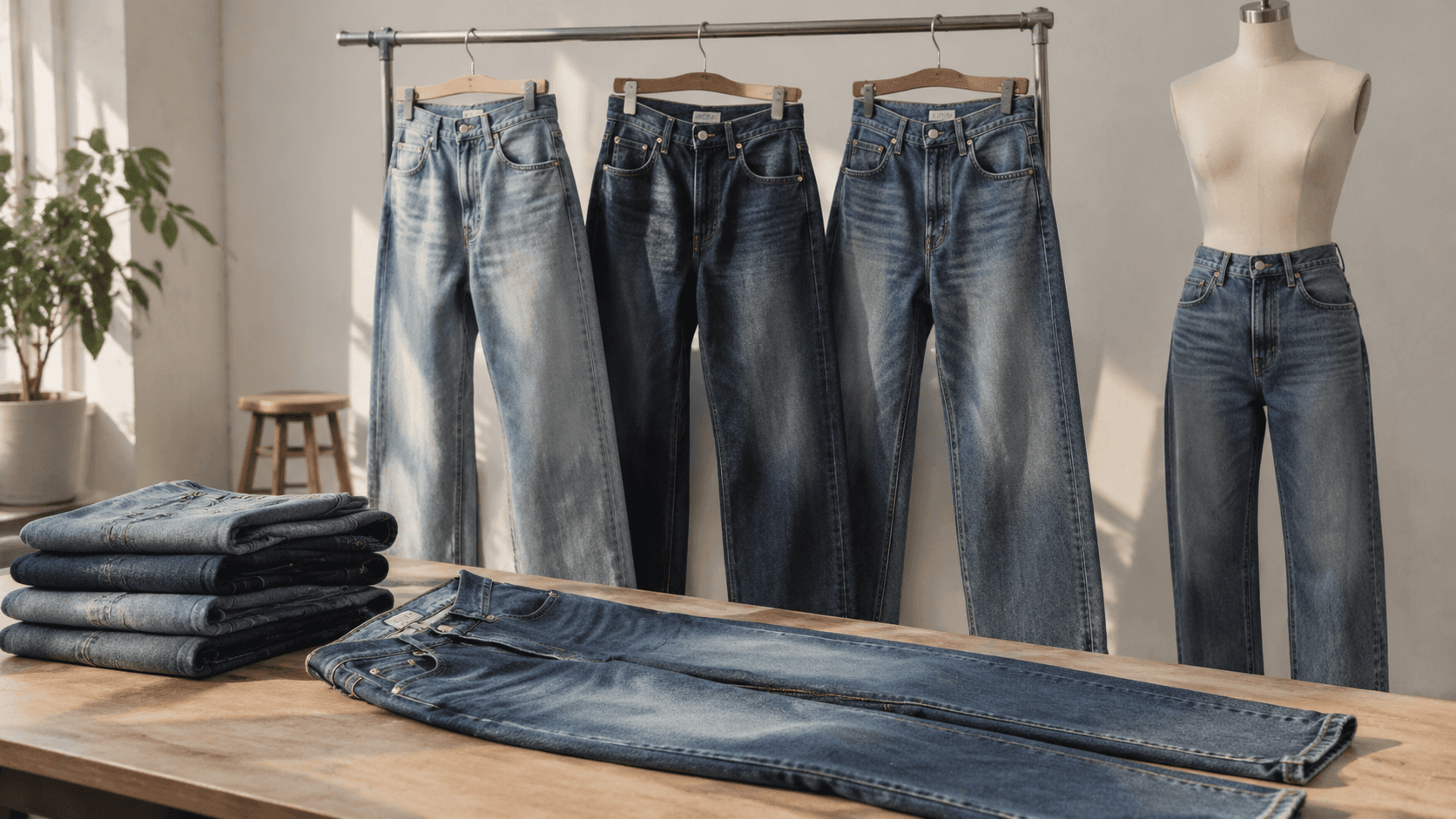
When restocking and style modifications are raised at the same time, it's easy to muddle the factory selection discussion. A buyer might say: the current styles are selling well, I want to restock a batch, and at the same time make the wash lighter and switch to our own main label. This sentence actually contains two procurement paths—restocking existing styles falls under ready-stock purchasing, while adjusting wash and changing labels falls under custom development. When choosing a custom denim manufacturer, the first step isn't comparing factories, but separating these two paths and verifying each one separately.
Ready-stock restocking: check the current ordering window, don't judge inventory from photos
For the ready-stock path, what you verify is the product page and ordering window. Sizes, quantities, minimum order quantities, and prices are subject to the current ordering window and business confirmation; the knowledge base does not store fixed inventory numbers. When restocking is needed, enter the ordering process from the product card, fill in the required sizes and quantities, and verify order and checkout information; if sizes are missing or quantities exceed available range, contact the business team to confirm supply or move into custom communication.
A common misjudgment here is inferring availability from style images. A listed style does not equal in-stock, and reference images do not prove deliverable quantities. If you simply want quick restocking or a trial sale, you can first check the ready-stock denim purchasing page style by style, rather than treating custom development reference styles as an inventory list.
Style modification development: from reference style to sample garment, keep records of confirmation milestones
The starting point of the custom path is a reference style or design materials, not inventory. OEM communication can be based on the customer's existing design drawings, tech packs, or reference samples; ODM communication can start from website reference styles and discuss adjustments to fit, fabric, wash, and brand details. Neither path means all designs can go directly into production—after receiving materials, development feasibility, materials, craftsmanship, pricing, and scheduling still need to be verified.
When modifications involve fabric or wash changes, the new plan cannot be treated as an equivalent substitute for the original style. Fabric substitution may affect color, wash, hand feel, and garment dimensions; after changes, samples should be re-verified. For sample review, it's recommended to consolidate feedback in one pass on fit, dimensions, fabric hand feel, color and wash, stitching, trims, and label placement, annotate areas with photos and specify target effects, distinguish must-fix issues from acceptable differences, and keep version numbers and confirmation records for each round.
Comparison of verification items across the two paths
| Verification item | Ready-stock restocking | Style modification development |
|---|---|---|
| Minimum order rules | Subject to the current detail page and ordering window; some products support 1-piece minimum and mixed sizes within the same style | Some custom development reference styles indicate 30 pieces per style minimum; other styles still require confirmation based on the plan |
| Pricing basis | Ready-stock page range prices and tiered prices, verified by total quantity of the same style and current specifications | Quoted per requirement; ready-stock prices do not apply |
| Confirmation target | Order sizes, quantities, and checkout information | Sample garments, specification versions, and order terms |
| Lead time basis | Same-day shipping for ready stock requires verification of actual inventory and dispatch conditions | Sampling 3 days; bulk delivery within 30 days depending on volume—both subject to confirmation with the specific order |
The figures in the table come from existing materials and represent capabilities and arrangements that require confirmation with the specific order; they are not unconditional commitments applicable to all styles. The confirmation milestone from which lead time is calculated should be written into the order.
Three questions to ask yourself when selecting a factory
First, is this about existing styles or modified styles? If existing styles, check the ordering window first; if modifying fit, fabric, wash, or brand labels, go through custom communication. Second, what materials do you have on hand? For a first inquiry, it's recommended to provide reference style numbers or product links, target market, estimated quantity per style, color and size breakdown, fabric or hand-feel requirements, wash effects, brand label and packaging requirements, target lead time, and destination country. If materials are incomplete, you can send reference images first and explain the details you most want to keep or adjust. Third, who verifies? Custom orders and ready-stock orders may be subject to different terms; return conditions, costs, and responsibilities are subject to the actual terms.
If the customer requires a specified inspection plan, third-party inspection, or test reports, this should be raised in advance to confirm arrangements, costs, and responsibilities; without materials, do not commit to a specific AQL level or pass rate.
A verifiable observation point
Next time you receive reference images or sample photos from a factory, ask one question first: does this image correspond to a listed ready-stock style, or a custom development reference style? If it's the latter, the photo can only help communicate style structure and design direction—it cannot prove that physical samples, inventory, or mass production capability exist. Clarify this question first, then decide whether to check the ordering window or arrange sampling, so the factory selection discussion doesn't get pulled back and forth between the two paths.