Shrinkage disagreement: where does bulk-to-sample consistency start to drift?
Addressing two common blind spots for brands and wholesalers in custom denim: shrinkage stays at verbal communication, and bulk-to-sample checks lack a single version basis. Starting from confirmation milestones, the article explains at which step shrinkage should be recorded and in what form, which materials must be locked after sample approval, and how quotation, MOQ and lead-time terms tie back to these two points. Suitable for buyers and sourcing staff advancing OEM/ODM development who need to turn technical requirements into checkable documentation.
Shrinkage should not rely on verbal promises. Provide pre-wash and post-wash measurements for the target market and write them into the sample specification so consistency can be checked against the same version at the bulk stage.
In this article
Shrinkage communication: confirm measurement state first, then discuss valuesSample stage: write shrinkage into the approved versionBulk vs. sample consistency: compare the same version, not the same photoQuotation, MOQ, and lead time: follow the confirmation checkpointsWhat can be checked first this round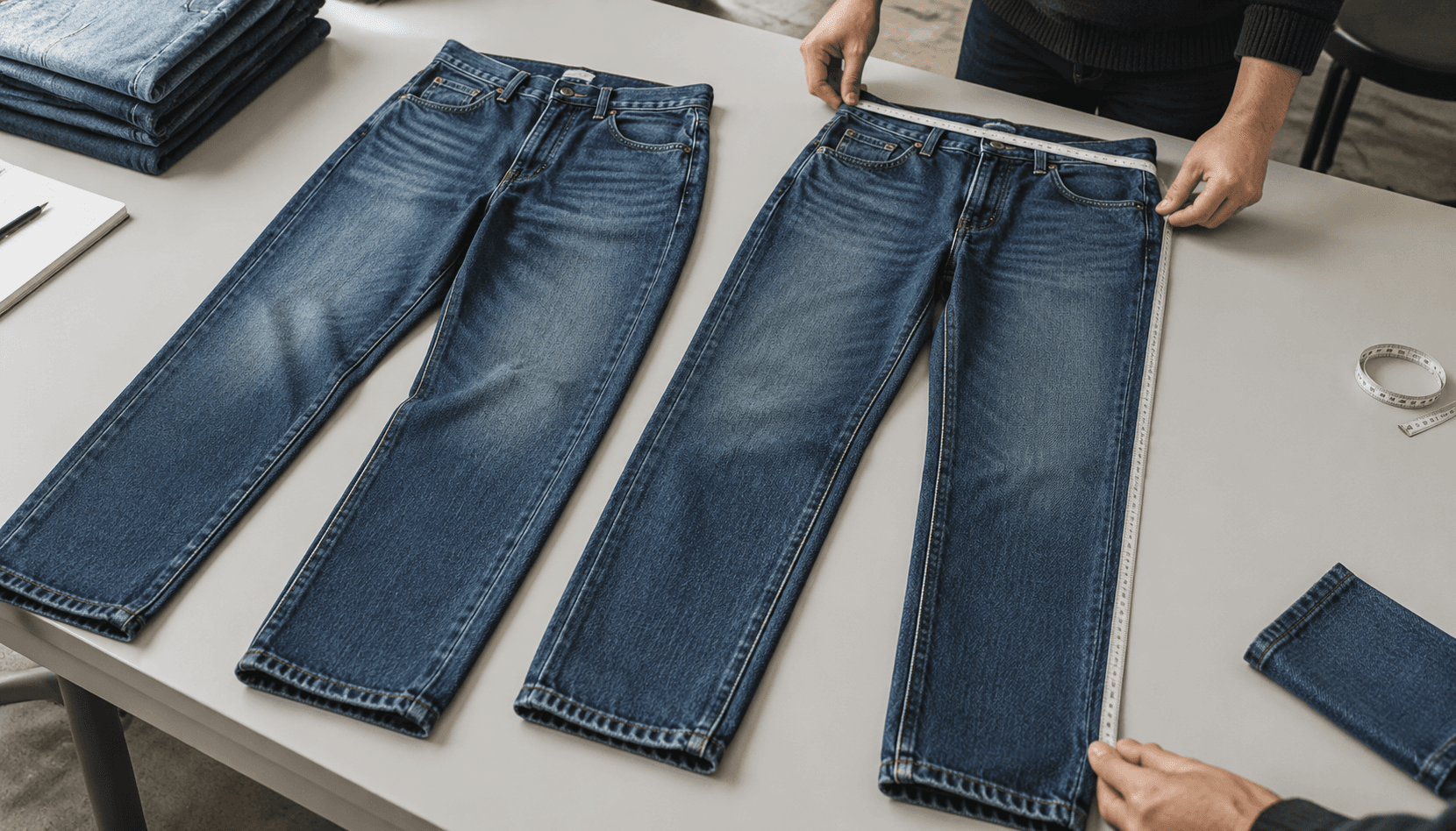
If shrinkage only stays at the verbal level of "it will shrink a bit," size differences between bulk production and sample garments often only surface upon receipt. To reduce this, first turn shrinkage from an adjective into verifiable data, then discuss consistency between samples and production.
Shrinkage communication: confirm measurement state first, then discuss values
Different fabric compositions, weights, and yarn structures produce different shrinkage behavior after the same wash treatment. The knowledge base is clear: parameters such as composition and weight should come from confirmed product specifications, fabric data, or sample records—not from photo judgment. Therefore, the first step in shrinkage communication is not to ask for a percentage, but to confirm three things: whether the measurement object is fabric or garment, whether dimensions are before or after wash, and which party's requirements the test method follows.
When customers provide size charts for their target market, the measurement state of key areas should also be noted. If waist, hip, inseam, and thigh measurements mix pre-wash and post-wash data, sample size verification loses its baseline. If testing or special standards are needed, they should be raised and the verification method confirmed during development—not asked just before bulk production.
Sample stage: write shrinkage into the approved version
During sampling, verify measurement method, size units, pre- or post-wash state, and allowable tolerances—these should be recorded alongside sample review. Sample approval means both parties have settled on the production reference, but it does not mean details the customer has not confirmed can be decided by the factory. If shrinkage is not in the approved version, bulk production has no size basis for comparison.
Fabric substitution directly affects color, wash, hand feel, and garment dimensions. After changing fabric, shrinkage-related sample dimensions should be re-verified; old sample data cannot be carried over to new fabric. Keep version numbers and confirmation records for each revision round, and re-check costs and timing when materials or construction change.
Bulk vs. sample consistency: compare the same version, not the same photo
Bulk production uses the specification version confirmed by both parties. Consistency checks should center on the approved sample, confirmed specifications, and order terms—checking garment dimensions, appearance, color difference, stitching, trims, and packaging. When deviations are found, record style number, quantity, photos, and measurement results, then confirm the handling plan with the business team.
A flat-lay photo can only verify a limited scope; color is affected by lighting and screens and cannot serve as an absolute color-difference standard. If inspection plans, third-party inspections, or test reports are required, they should be raised in advance with arrangements, costs, and responsibilities confirmed. For packaging and shipping requirements related to bulk vs. sample consistency, see How Do Packaging and Shipping Requirements for Bulk Denim vs. Samples Affect Acceptance—its explanation of acceptance checkpoints works well alongside the size-version verification in this article.
Quotation, MOQ, and lead time: follow the confirmation checkpoints
Quotation depends on style, quantity, fabric, wash, trims, branding customization, packaging, and delivery requirements. If shrinkage testing involves additional verification, state at the quotation stage whether it is billed separately. Whether MOQ is calculated by style, color, or size must also be written into the proposal; some custom development reference styles indicate 30 pieces per style as MOQ, while other styles still require confirmation per proposal and cannot be treated as a uniform commitment.
The confirmation checkpoint from which lead time is counted must be written into the order. Sampling in 3 days, bulk delivery within 30 days depending on volume, and same-day dispatch for available stock—these are capabilities and arrangements that require confirmation against the specific order and cannot be guaranteed to apply unconditionally to all styles. Dispatch does not equal arrival; transit and customs clearance time are calculated separately.
What can be checked first this round
If you are developing a custom denim style, first compile the target market size chart, pre-/post-wash measurement states, and allowable tolerances into a one-page specification, and submit it together with reference style numbers, estimated quantity, wash requirements, and destination country. Customer service will first confirm whether it is available stock or custom, then follow up on missing items that affect quotation. The next thing to confirm is whether this specification can serve as the common basis for sample review and the approved version.