Overseas Brand Denim Supplier Communication Checklist: First Clarify What Images Can Prove
This article is intended for overseas brand buyers and wholesalers who need to develop denim collections, explaining how to distinguish between what images show and what specifications can be verified when communicating with suppliers. It covers the boundaries of reference images, the information to prepare for a first inquiry, the size and wash specifications to confirm before sampling, and the conditions to lock down before quoting.
Reference images can only communicate style direction and cannot prove composition, weight, or deliverable quantity; the first inquiry should at minimum include reference styles, quantity, size ratio, and target market.
In this article
What images can and cannot do in communicationSplit your materials into two stacks for the first inquiryLock down sizing and wash specifications before samplingConditions to lock down before quoting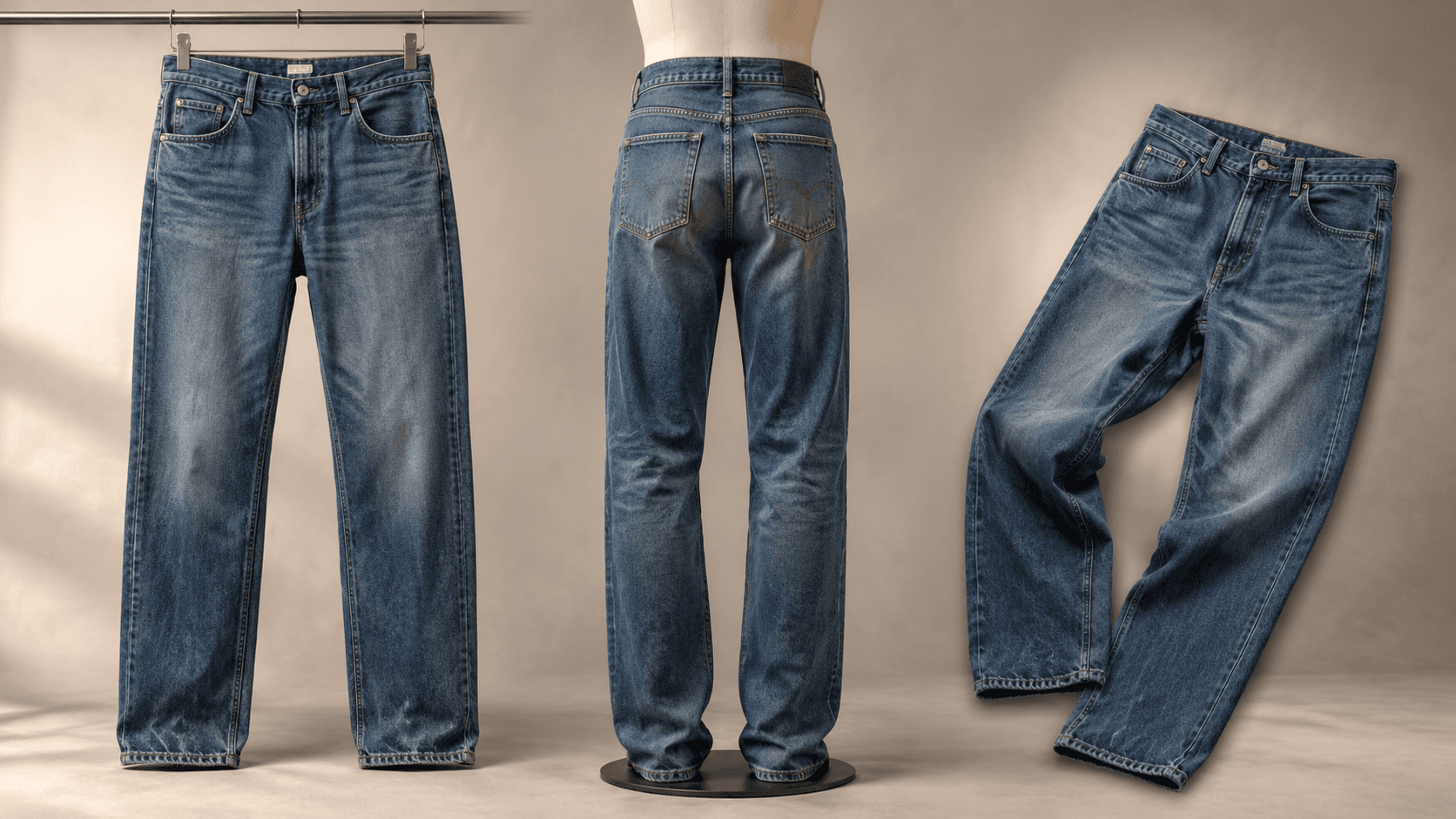
Reference images can indicate a style direction, but they cannot specify fabric composition, weight, or deliverable quantities. If you take a model shot or flat-lay photo to a supplier and ask whether they can make it, how much it costs, and how long delivery takes, it is difficult for them to give you a verifiable answer. This image comes with no fabric specifications, size chart, or wash requirements, so any quotation can only be a range estimate.
What images can and cannot do in communication
Front and back model shots, flat-lays, and detail photos are suitable for identifying structural features such as the silhouette, pocket placement, waistband height, and seam direction. You can mark directly on the image "keep this pocket" or "shorten the inseam," which is less prone to misinterpretation than a text description.
However, images cannot be used to judge fabric stretch, weight, or shrinkage, nor can they prove that a particular color wash can be reproduced on a different fabric. With the same reference image, changing the fabric or wash can noticeably alter the hand feel and color of the finished garment. Therefore, in communication, position images as "direction confirmation," and leave specification confirmation to fabric data, size charts, and sample garments.
Split your materials into two stacks for the first inquiry
One stack is the confirmed items: reference style number or link, estimated quantity per style, color and size breakdown, target market, and destination country. These directly affect pricing and scheduling; missing any one of them may require back-and-forth follow-ups.
The other stack is the pending items: fabric composition and weight, wash effect, brand labels and packaging, and target delivery date. Pending does not mean you cannot start — you can first send reference images to explain the details you most want to keep or adjust, let the sales team confirm whether it is an available style or a custom development, and then fill in the rest item by item.
Here is an easily overlooked boundary: custom development reference styles show a design direction and do not mean that stock is available for immediate shipment. If your goal is quick replenishment for a test sale, you should first go the available-styles route and check sizes and available quantities style by style; if you need to change the fit, fabric, or brand details, then move into custom development discussions. The two paths have different information requirements, and mixing them in one inquiry tends to produce vague answers.
Lock down sizing and wash specifications before sampling
The size chart should provide key measurements for the target market, such as waist, hip, front and back rise, inseam, thigh, and leg opening. S, M, and L in different markets cannot be directly treated as the same size. Also confirm the measuring method, units, and whether the measurements are before or after wash.
For wash color, reference images are affected by lighting and screens and cannot serve as a color-difference standard. You can provide a target color swatch or reference garment, specify the requirements for lightness/darkness, whiskering, grinding, distressing, and other treatments, and confirm the effect through sample garments. After changes to fabric or construction, wash performance may differ, and sample garments need to be re-checked — do not assume equivalent substitution.
Conditions to lock down before quoting
Quotations depend on style, quantity, fabric, wash, trims, brand customization, packaging, and delivery requirements. When comparing quotes, first confirm whether sample fees, trims, packaging, shipping, and taxes are included. Also ask clearly whether the MOQ is calculated per style, per color, or per size, and whether different styles can be combined for counting. Some custom development reference styles indicate an MOQ of 30 pieces per style, but this does not apply to all styles, fabrics, or colors; other custom styles still need to be confirmed based on the specific plan.
Delivery timelines should likewise be broken down: sampling and bulk production are different milestones, shipping does not equal arrival, and transit and customs clearance times are calculated separately. Capacity and scheduling need to be confirmed against the specific order — a statement made in one conversation cannot be treated as an unconditional commitment for all styles.
At this stage, you can do one thing first: put the reference images, estimated quantities, size breakdown, and target market into a one-page requirements brief and send it to the supplier to confirm whether it is an available style or a custom development path.