
Custom Denim Skirt Development: How Low Can Small-Batch MOQs Go?
For brands and buyers preparing to develop denim skirts, this explains that small-batch custom MOQs depend on the style, fabric, wash, and trims rather than a fixed number. Some custom development reference styles on the site are listed at 30 pieces per style, while other styles must be confirmed based on the plan; some available stock items support a 1-piece minimum and mixed sizes within the same style. The article distinguishes the two paths—available stock and custom—and outlines the materials to prepare and the order of checks before inquiry.
Some custom development reference styles on the site are listed at 30 pieces per style, while other custom styles still need to be confirmed based on the plan; some available stock items support a 1-piece minimum and mixed sizes within the same style, and the rules for the two cannot be mixed.
In this article
Is 30 pieces a universal threshold?With small quantities, should you look at stock first or go straight to custom?What additional points must be confirmed for skirt development?Are branding labels and trims counted in the MOQ?What to provide first in an inquiry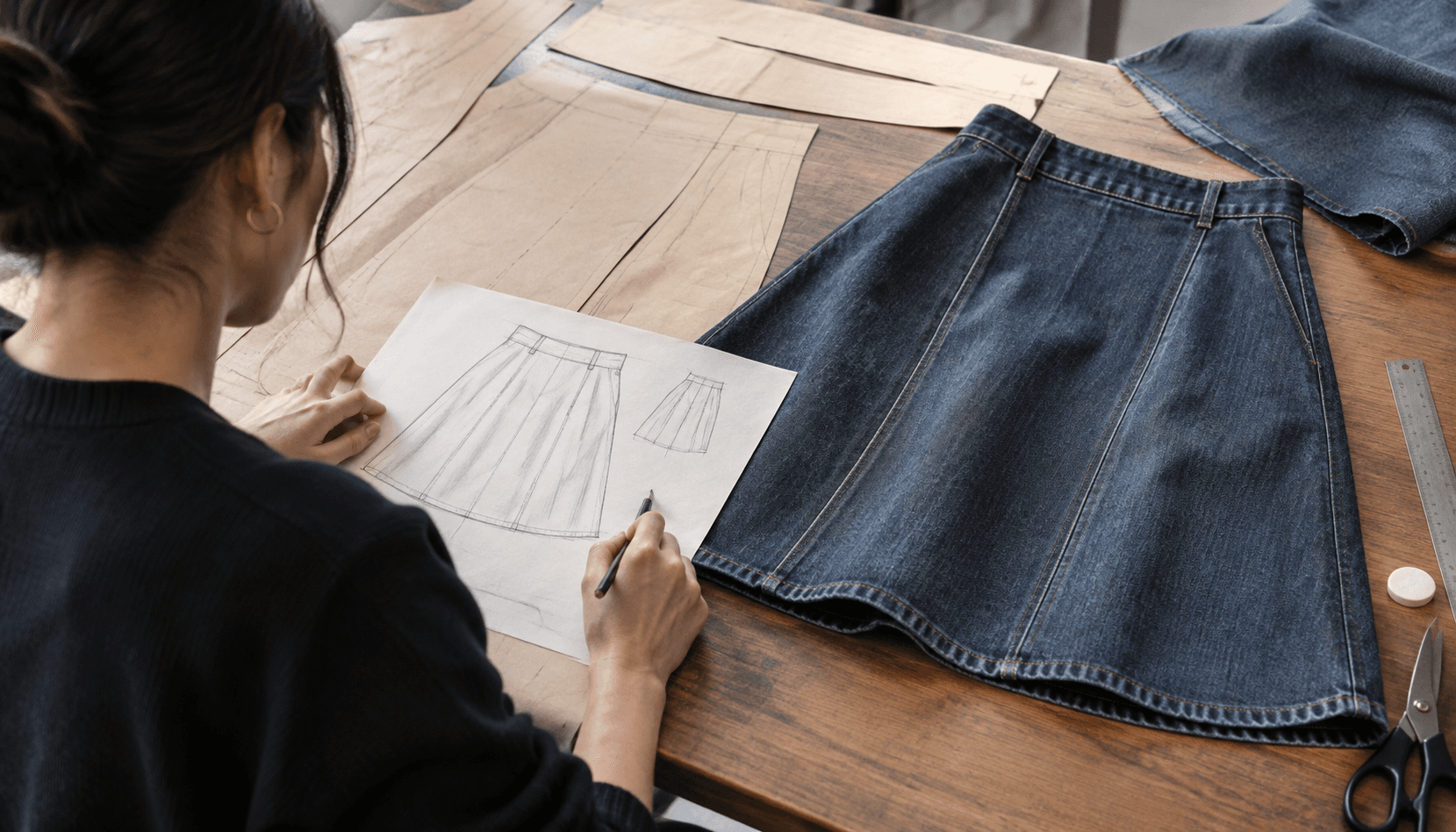
There is no universal MOQ number for small-batch custom denim apparel. Some custom development reference styles on the website are marked with an MOQ of 30 pieces per style, while other custom styles still need to be confirmed based on the specific plan. For available stock items, the MOQ shown on the current product detail page and ordering window applies; some items support a 1-piece minimum and mixed sizes within the same style. The rules for these two paths cannot be applied interchangeably.
Is 30 pieces a universal threshold?
No. This number only applies to the custom development reference styles already marked on the website and cannot be extended to all styles, fabrics, or colors. Custom denim skirt development involves fit, wash, trims, and branding labels, and any change in one of these may affect the MOQ rules.
What needs to be confirmed is the unit by which MOQ is calculated: by style, by color, or by size. Quantities for different styles usually cannot be combined by default. If you plan to develop multiple skirt shapes, verify each style individually rather than reporting a total to the sales team and assuming it can be evenly allocated.
With small quantities, should you look at stock first or go straight to custom?
If the goal is quick replenishment or a test sale, you can start with the stock purchasing page and check sizes, quantities, and shipping arrangements style by style. Stock and custom are different purchasing paths; stock pages do not mix in custom items, and custom items display reference designs and do not mean they are already in stock.
If you must change the fit, switch fabric, adjust the wash, or add branding labels, then you enter custom communication. When quantities are small, you can first discuss stock trial sales or sample development, then verify whether small-batch customization can be arranged. Whether it can be accepted and under what conditions depends on the verification results of the specific plan, not on promising a quantity first and filling in details later.
What additional points must be confirmed for skirt development?
Skirts and pants have different measurement points. Customers need to provide a size chart or key body measurements according to the target market. For skirts, measurement points such as waist, hip, and skirt length should be completed according to the specific structure, and the measuring method, size unit, pre-wash or post-wash state, and allowed tolerance should be stated. S, M, and L labels in different markets cannot be directly treated as the same size.
For fabric, accurate parameters such as composition, weight, yarn, and weave should come from confirmed product specifications, fabric documents, or sample records, and cannot be judged from photos. For styles requiring stretch, stretch, recovery, and garment fit requirements should also be confirmed at the same time; fabric substitution may affect color, wash, hand feel, and garment dimensions, and samples should be rechecked after any change.
For wash effects, you can provide target color samples, reference garments, or clear images, and explain light or dark shades, whiskering, grinding, holes, fraying, or other treatment requirements. Reference images are affected by lighting and screens and cannot serve as an absolute color difference standard; final confirmation is based on the sample.
Are branding labels and trims counted in the MOQ?
Main labels, care labels, leather patches, buttons, rivets, zippers, hangtags, and packaging can be discussed, but customers need to provide usable artwork, dimensions, colors, placement, and quantity requirements, and confirm authorization for pattern and trademark use. Trims and packaging may have separate quantity, cost, and lead time requirements, which should be confirmed item by item during quotation. Before confirmation, do not promise that all are free or that any quantity can be customized.
This also means that even if the garment MOQ is agreed upon, if trims cannot meet the supplier's minimum order, the overall arrangement may still be affected. When checking, asking about garments and trims separately is more effective than asking generally, "What is the minimum number of pieces?"
What to provide first in an inquiry
To reduce repeated confirmation, the first inquiry should ideally include: reference style number or product link, design drawing or reference sample, target market and men's or women's positioning, estimated quantity per style, color and size breakdown, fabric or hand feel requirements, wash effect, branding label and packaging requirements, target delivery date, and destination country. If the information is incomplete, you can first send reference images and explain the details you most want to keep or adjust.
Customer service will first confirm whether it is stock or custom, then follow up on missing items that affect quotation. Focus on two or three key questions at a time rather than blocking customers behind a lengthy questionnaire. The next step is to form a requirement description that can be quoted, not to first obtain an MOQ number detached from style conditions.
If you have already decided to proceed with custom development, you can learn about the communication entry point from the custom denim development and private label services page, then prepare your first inquiry according to the information checklist above.