Differences between denim apparel OEM and ODM: from who provides the design drawings to how sampling responsibilities are divided
For brands and wholesalers preparing to develop denim styles, this explains the practical differences between OEM and ODM in terms of starting materials, design ownership, and sample confirmation. Rather than framing one as better than the other, the article helps readers assess what materials they already have, which parts of development work they need the other party to handle, and which conditions must be clarified before quoting.
OEM samples from customer-provided design drawings or tech packs, while ODM starts from ZHIZHI custom development reference styles and adjusts fit, fabric, and wash; both require feasibility checks before quoting—verbal confirmation alone is not enough to begin production.
In this article
Have design drawings? Don't jump straight to OEM—check material completeness firstIs ODM just picking an available style? What changes require re-confirmationQuoting and sampling: what each path requires you to prepareResponsibility boundaries at a glanceWhen to switch to the other path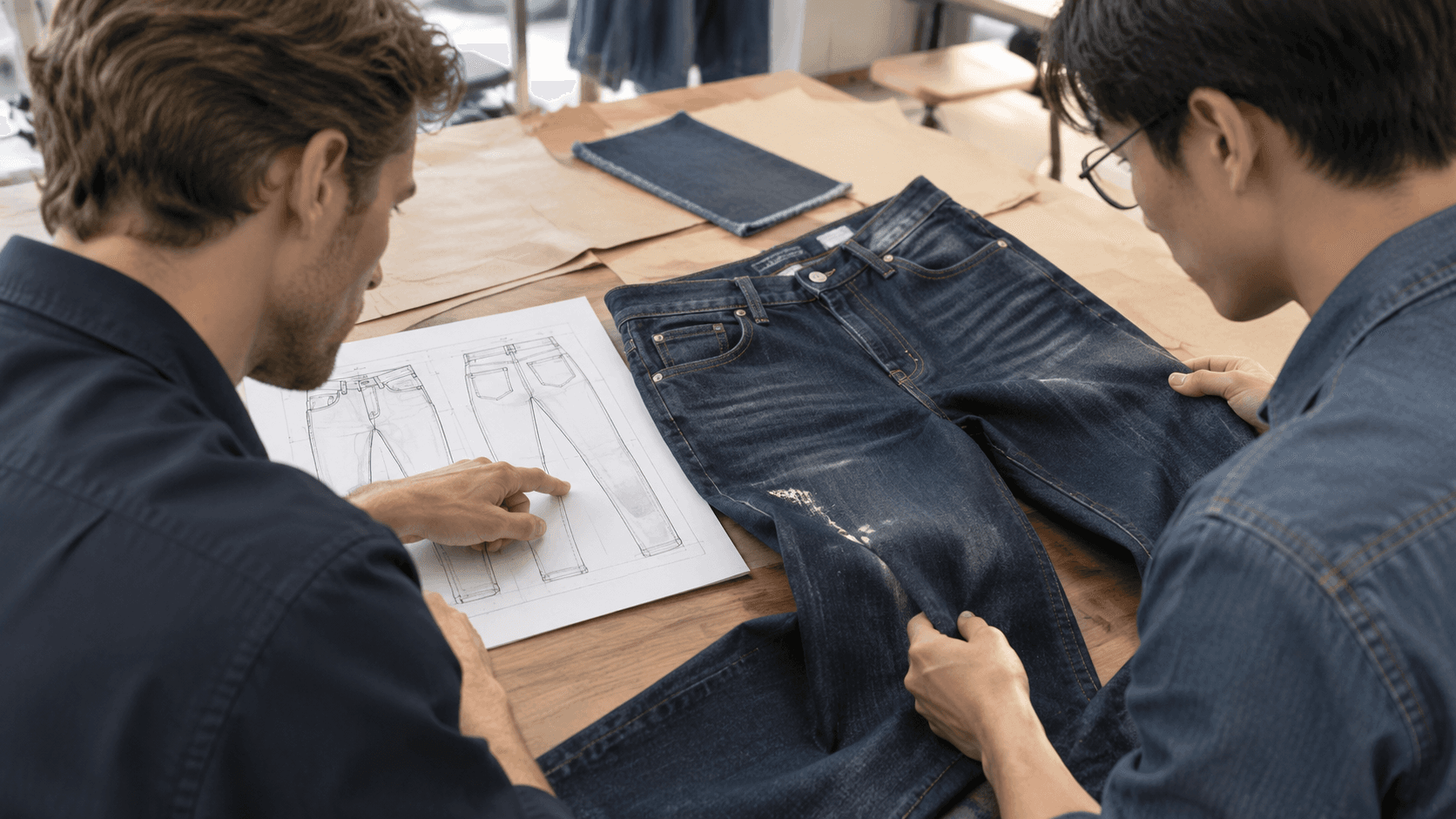
The core difference between denim OEM and ODM isn't in the name—it's in who provides the design basis first. With OEM, the customer typically supplies design drawings, tech packs, or reference samples, and the factory develops samples and produces according to those materials. With ODM, the starting point can be a reference style from the ZHIZHI website, with fit, fabric, wash, and branding details adjusted together. Both paths are viable, but the prerequisites differ: the former requires confirming whether your materials are sufficient to support sampling, while the latter requires confirming how far a reference style will be modified and which areas need re-verification.
Have design drawings? Don't jump straight to OEM—check material completeness first
Having design drawings in hand doesn't mean you can go straight into OEM sampling. Drawings can show appearance, but denim styles also need to be pinned down on fabric composition, weight, stretch, wash effect, trim specifications, and key measurement points. If the artwork only shows a front view and color direction, the sales team will typically follow up on missing items that affect quoting and sampling before determining whether to proceed.
The starting point for OEM communication can be design drawings, a tech pack, or a reference sample. The closer the materials are to an executable state, the less rework during sampling. Conversely, asking for a firm price and lead time based on a single style image will usually only yield a directional response, not an order commitment.
Is ODM just picking an available style? What changes require re-confirmation
ODM is often understood as picking an existing reference style and changing the label. In actual communication, modifying the fit, switching fabric, or adjusting the wash can all affect garment measurements and hand feel, requiring re-verification of samples—a reference style should not be treated as a finalized product.
The men's and women's denim pants, jackets, shirts, skirts, and shorts shown on the ZHIZHI website can serve as a starting point for ODM discussions. Seeing a high waist, straight leg, wide leg, cargo pockets, or a particular wash effect only indicates design direction—it does not allow conclusions about fabric composition, stretch, or availability. If you want to change brand labels, leather patches, buttons, or packaging, artwork, placement, quantity, and costs still need to be confirmed separately.
Quoting and sampling: what each path requires you to prepare
Quoting depends on style, quantity, fabric, wash, trims, branding customization, packaging, and delivery requirements—the same for both OEM and ODM. The difference is the starting point of materials: OEM customers need to provide design drawings or a tech pack, while ODM customers can start from a reference style number and specify which details to keep and which to adjust.
During sampling, both paths benefit from consolidating feedback on fit, measurements, fabric hand feel, color and wash, stitching, and trim placement in one go, using photos to mark specific areas. Keep version numbers and confirmation records for each round of revisions. Sample approval is a production reference—it does not mean that unconfirmed details can be decided by the factory on its own.
Responsibility boundaries at a glance
| Checkpoint | OEM communication | ODM communication |
|---|---|---|
| Design starting point | Customer provides design drawings, tech pack, or reference sample | Discussion starts from a ZHIZHI reference style |
| Fit responsibility | Sample according to customer materials; customer confirms measurements and construction | Both parties confirm how far the reference style is modified and what is retained |
| Fabric and wash | Customer-specified or jointly confirmed; re-verify samples after changes | Discuss substitutions based on the reference style; samples also require re-verification |
| Branding details | Customer provides artwork, placement, and authorization materials | Artwork also required; usability to be confirmed |
| Quoting basis | Style, quantity, fabric, wash, trims, packaging, delivery | Same as left, plus scope of modifications must be specified |
This table only clarifies communication responsibilities—it does not mean all designs can go directly into production. When materials or construction change, costs and timelines must be reviewed accordingly.
When to switch to the other path
If you only have reference images without a complete tech pack but want to develop according to your own brand requirements, you can start with ODM communication and gradually fill in target customer profile, style direction, key measurements, and budget. Conversely, if you already have a mature tech pack and just need sampling according to drawings, the OEM path is more direct.
For smaller quantities, you can first discuss available styles for test sales or sample development, then verify whether customization can be arranged. Some custom development reference styles on the website are marked with a 30-piece-per-style minimum, but this is not a uniform commitment across all styles, fabrics, or colors—specific MOQs still need to be confirmed per proposal. For available styles, the MOQ shown in the current ordering window applies; some support a 1-piece minimum with mixed sizes within the same style.
Whichever path you take, for a first inquiry it's best to include reference style numbers or product links, design drawings or reference samples, target market, estimated quantity per style, color and size breakdown, fabric or hand-feel requirements, wash effect, brand label and packaging requirements, target delivery date, and destination country. When materials are incomplete, sending reference images with a note on which details you most want to keep is more effective than repeated verbal descriptions. To learn about the scope of custom communication, see custom denim development and private label services; to check available styles first, start from available denim sourcing.