Custom Denim Trims and Brand Label Development: First Distinguish Reference Images from Approval Samples
For brands and buyers who need custom main labels, care labels, leather patches, buttons, rivets, zippers, hangtags, and packaging. This article explains what materials are required for trims and label development, the difference between reference images and approval samples, how to verify label content for different markets, and why costs and lead times must be confirmed item by item.
For custom trims and brand labels, first provide artwork, dimensions, colors, placement, and quantities, and confirm trademark authorization; reference images are only for communicating direction and cannot serve as a production basis—the approval sample is final.
In this article
What reference images can and cannot tell youWhy trademark use authorization must be confirmed before orderingWhy trim and packaging costs and lead times must be confirmed item by itemWhat to check after confirmation samples arriveWhen to include trim requirements in custom development discussions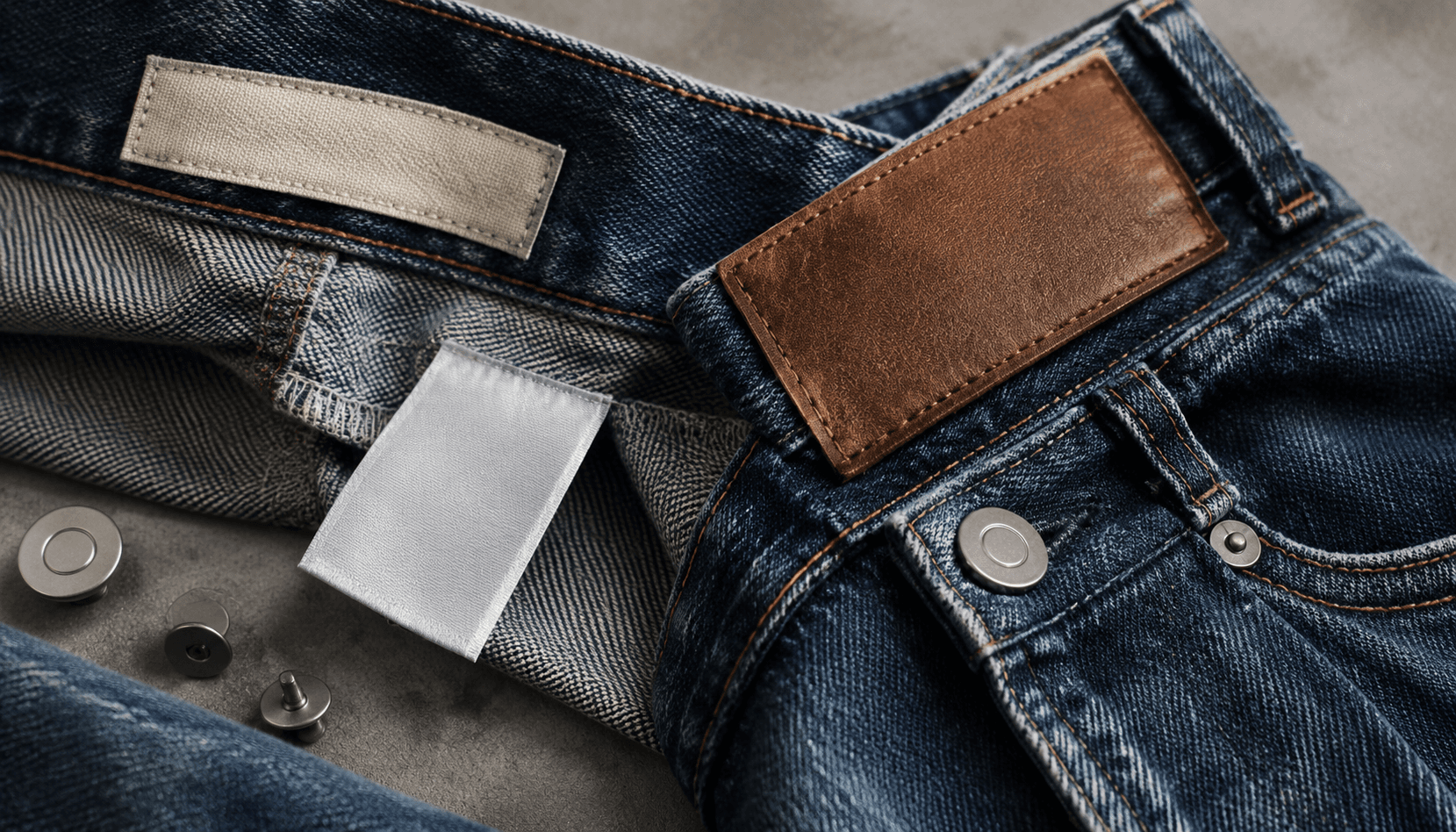
Whether custom denim trims and brand labels can be produced depends on whether the artwork, dimensions, colors, placement, quantities, and trademark use authorization you provide are clear. Only when these materials are complete can we verify feasibility, costs, and lead times; with only reference images, we can usually only discuss direction first, and they cannot be used directly as a production basis.
What reference images can and cannot tell you
Reference images are suitable for indicating the visual direction: the shape of the main label, the color of the leather patch, the layout of the hangtag. But they do not prove materials, process parameters, or the final finished effect. For example, a photo of a leather patch cannot show thickness, surface treatment, or embossing depth. These need to be determined by physical confirmation samples or written specifications.
Similarly, artwork for trims and labels needs to specify dimensions, colors, placement, and quantity requirements. Placement is especially easy to overlook—whether the main label is sewn inside the back neck or at the side seam, whether the care label goes in the left or right side seam, whether the leather patch is on the waistband or the pocket—these must be written clearly before sampling.
Why trademark use authorization must be confirmed before ordering
Brand labels involve trademark use. Customers should provide usable artwork and confirm the pattern and trademark use authorization. This is not a procedural courtesy, but a confirmation of which materials the labeling information is based on. Without authorization confirmation, even complete artwork should not go directly into production.
Labeling information and material claims are based on confirmed materials. Label content for different markets needs to be checked against specific requirements—such as fiber content labeling, care instructions, and country of origin information. Requirements differ by market, and one set of label content cannot be used universally.
Why trim and packaging costs and lead times must be confirmed item by item
Trims and packaging may have independent quantity, cost, and lead time requirements, which should be confirmed item by item at quotation. Main labels, care labels, leather patches, buttons, rivets, zippers, hangtags, and packaging may each have different minimum order quantities, unit prices, and arrival times. Until confirmed, we do not promise that everything is free or that any quantity can be customized.
If you are simultaneously developing fit, wash, and brand details, the pace of trim confirmation should align with sample review. For more on how to distinguish reference images from confirmation samples in the trims process, see the separate article "Before Customizing Denim Trims and Brand Labels, First Distinguish Reference Images from Confirmation Samples."
What to check after confirmation samples arrive
After receiving trim confirmation samples, we recommend checking: whether colors match the artwork, whether dimensions are within the specified range, whether material hand feel meets expectations, whether placement marks are clear, and whether text and patterns are legible. Consolidate feedback in one go, annotate locations with photos, and state the target effect in writing to avoid conflicting verbal comments across multiple rounds.
Keep version numbers and confirmation records for each round of changes. When materials or structures change, recheck costs and timing at the same time. Once trim confirmation samples are confirmed by both parties, they serve as production reference—this does not mean that details the customer has not confirmed can be decided by the factory at its own discretion.
When to include trim requirements in custom development discussions
If you have already entered the custom development stage, trim and brand label requirements can be discussed together with fabric, wash, and fit. For the complete custom development path, see Custom Denim Development and Private Label Services. If you are still at the style selection stage, first confirm whether you are purchasing available styles or developing to brand requirements, then decide how deep the trim discussion should go.
The materials typically needed are these: artwork, dimensions, colors, placement, quantities, and trademark authorization confirmation. Listing these in your first inquiry saves more time than going back and forth with follow-up questions.