
How are denim sample revisions confirmed? Start by checking whether the comments map to verifiable parts
For brands and buyers developing denim samples. Sample revisions often break down between verbal comments, photo annotations, and version records. This article explains how to map feedback on fit, measurements, wash, stitching, and trims to verifiable parts and target outcomes, and how to distinguish must-change items from acceptable variations to reduce rework.
The key to confirming sample revisions is not how many rounds were made, but whether each round's comments map to specific parts, target outcomes, and version numbers—otherwise it gets messier with every revision.
In this article
Verbal comments must first become part plus target effectDistinguish required changes from acceptable differencesMeasurement feedback must clearly state the measuring methodWash and craft effects are confirmed by samples, not imagesWhat sample approval means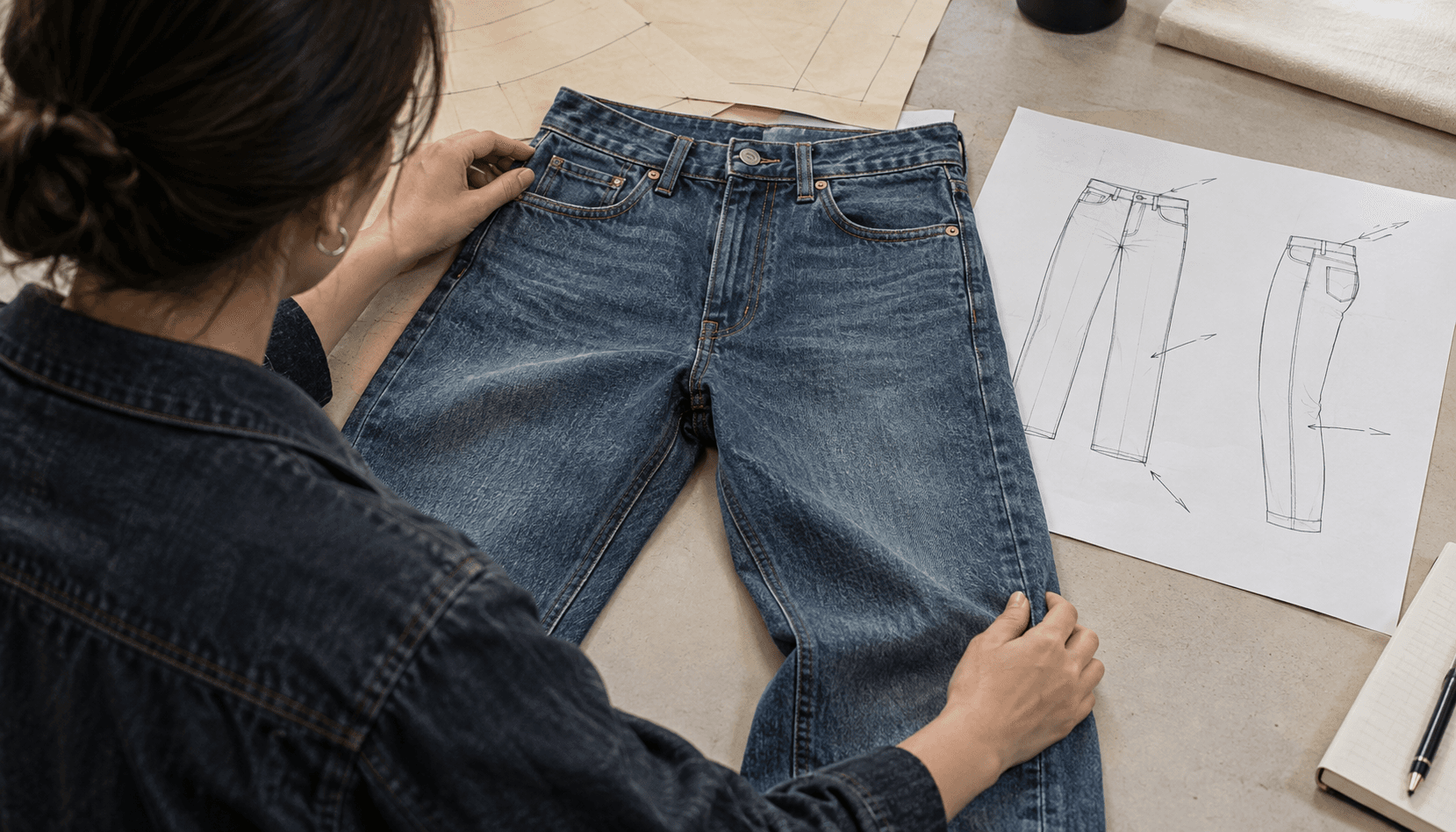
When sample revisions cannot be confirmed, it is usually not because there are too few comments, but because the comments have not been tied to checkable parts. If fit, measurements, wash, stitching, trims, and label placement remain at the level of descriptions like "take it in a bit more" or "make the color darker," the factory may interpret them differently each time, and the next round of samples will naturally not match.
To judge whether a round of revisions can be confirmed, first look at three things: which part the comment refers to, what state it is expected to be changed to, and which sample version is used as the baseline. If any one of these is missing, the round of revisions has not yet formed an executable record.
Verbal comments must first become part plus target effect
After receiving the sample, it is advisable to consolidate feedback in one go rather than raising it in scattered batches. Fit, measurements, fabric hand feel, color and wash, stitching, trims, and label placement can all be clarified in the same round, with photos marking the parts and written target effects.
"The waistband is too loose" is a feeling; "reduce the waist circumference by 1 cm according to the confirmed size chart, with no change to waistband height" is an executable comment. The same applies to wash: "make the color a bit lighter" is less useful than specifying whether the overall base color, the whisker placement, or the bleaching range needs adjustment. Reference images are affected by lighting and screens and cannot be used as an absolute color difference standard, so target effects are best explained together with physical color samples or confirmed samples.
If comments conflict with each other, for example one colleague asks for narrower legs while another asks to preserve room for movement, align internally first before sending to the factory. Do not send two versions of comments at the same time.
Distinguish required changes from acceptable differences
Not all deviations need to be changed. During sample review, divide feedback into two categories: required changes and acceptable differences.
Required changes are usually issues that affect wearing, fit structure, or customer-confirmed specifications, such as key measurement points exceeding allowed tolerance, wash effects clearly deviating from the confirmed direction, or incorrect trims. Acceptable differences may include slight differences in fabric hand feel or minor color differences in non-key areas.
The point of classification is to control rounds. Keep version numbers and confirmation records for each round of revisions, and when materials or structure changes are involved, review cost and timing at the same time. Sample fees, number of revisions, and shipping arrangements are subject to project agreements; do not assume that any number of rounds is free by default.
For how to keep revision records on file, refer to How to confirm denim sample revisions: turn verbal comments into checkable revision records. The key is to match each round of comments with the corresponding version.
Measurement feedback must clearly state the measuring method
Measurements are the part most prone to different interpretations. Customers need to provide a size chart or key measurement points according to the target market, such as waist, hip, front rise, back rise, inseam, thigh, and leg opening. When giving feedback on sample measurement issues, also state the measuring method, unit, pre-wash or post-wash condition, and allowed tolerance.
S, M, and L labels in different markets cannot be directly treated as the same measurements. For the same sample, conclusions from flat measurement and try-on may differ, so try-on feedback should also be recorded. However, bulk production uses the specification version confirmed by both parties, and the wearing effect of all sizes cannot be inferred solely from a model's body shape.
Wash and craft effects are confirmed by samples, not images
Customers can provide target color samples, reference garments, or clear images to explain light or dark shades, whiskers, bleaching, holes, fraying, or other treatment requirements. However, because fabrics and structures differ, the same treatment may present different hand feel and color, so effects should be confirmed through samples, with key positions and details to be preserved recorded.
Do not promise zero color difference or absolutely no fading. Reference images can only indicate direction; the final effect is subject to the confirmed sample. If testing or special standards are required, the requirements and verification methods should be clearly specified during the development stage.
What sample approval means
Sample approval means both parties have established the production reference, but it does not mean that details not confirmed by the customer can be decided by the factory on its own. After each round of revisions, synchronize the latest version to avoid inconsistency among drawings, samples, and orders.
If the project also involves an overall plan for fabric, wash, trims, and brand labels, you can learn about the scope of communication on the denim custom development and private label services page.
Whether a round of revisions can move to the next round depends on whether the comments cover the three items: part, target effect, and version baseline. When all three are present, rework has a direction to converge; if any one is missing, the next round of samples may still not match.