The difference between sourcing in-stock denim and custom development: first clarify whether you need replenishment or a design change
This article is for brands, wholesalers, and buyers who need to replenish stock or develop new styles, explaining how the difference between sourcing in-stock denim and custom development affects style selection, pricing, and delivery. The key is to first determine the path with one question: sourcing existing styles, or developing to brand requirements. In-stock availability is subject to the current order window; custom development follows the custom denim OEM process, confirmed step by step from requirement discussion to sample approval, and reference styles must not be treated as existing stock.
In-stock sourcing and custom development are two different paths: the former checks sizes, stock, and shipping conditions on the current product page; the latter discusses fit, fabric, wash, and brand details based on reference styles, with MOQ, pricing, and lead time confirmed item by item.
In this article
Buying available styles: check the current ordering window firstCustom development: confirm step by step from requirements to samplesMinimum order quantities cannot be applied across pathsWhat pricing and lead times each depend onWhat images and samples can each prove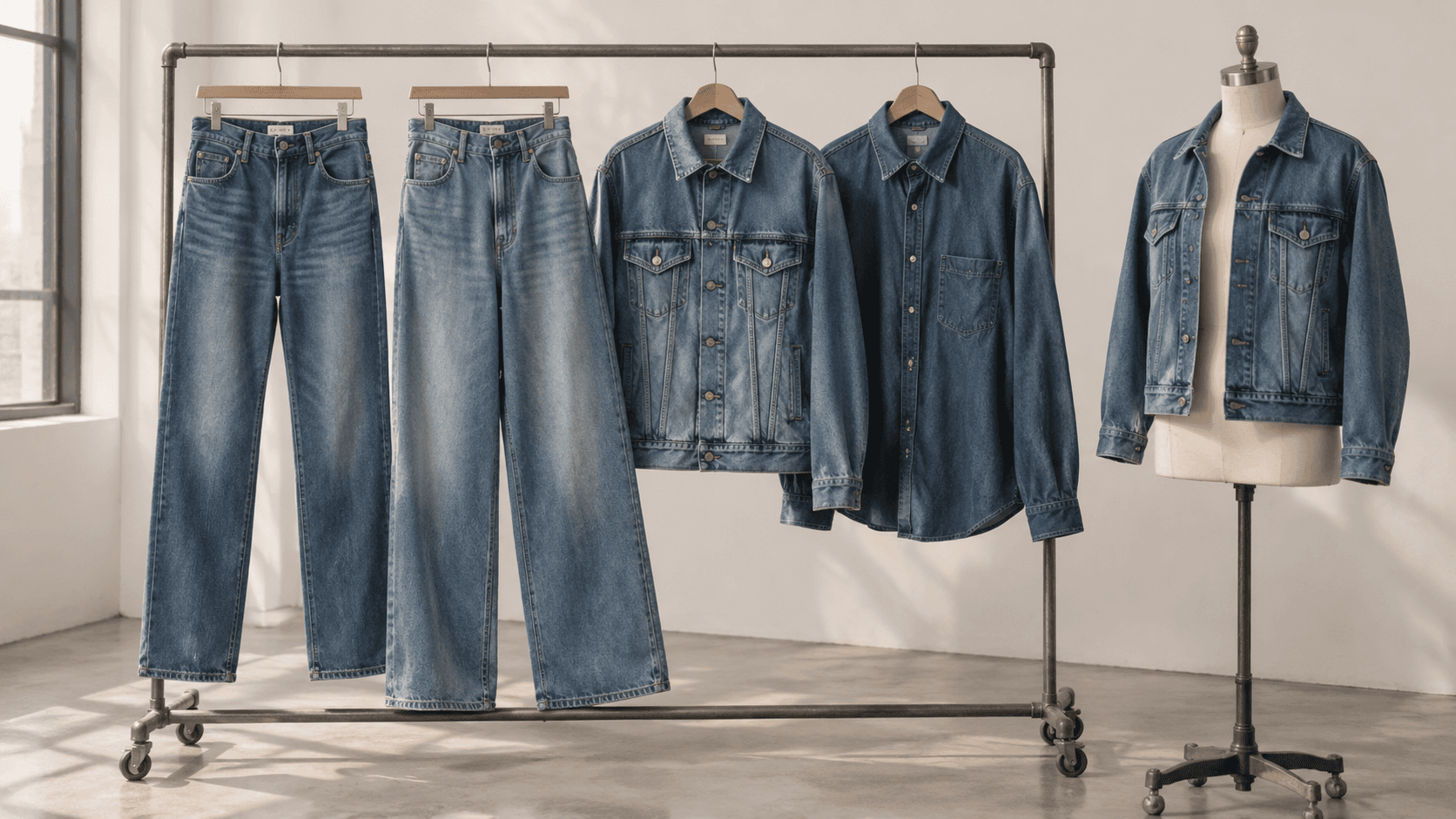
Start with one qualifying question: are you restocking existing styles, or do you need to adapt the fit, switch fabrics, or adjust the wash to your own brand requirements? The answers differ, and so do the materials you'll need to verify, the way quotes are prepared, and the lead-time terms. This is also the most practical difference between buying available denim and custom development—it's not a debate over terminology, but a difference in purchasing path.
Buying available styles: check the current ordering window first
If the goal is fast restocking or a test run, go through the available styles page item by item, enter the product card's start ordering or select quantity on the detail page, fill in the quantities needed per size, then review the order and checkout information. Sizes, availability, minimum order quantities, and prices are subject to the current ordering window and confirmation from the sales team; the knowledge base does not store fixed inventory figures or long-term valid prices.
Some available products support a 1-piece minimum and mixed sizes within the same style, but this must be verified for each specific product under current rules and cannot be assumed to apply to all styles. If a size is missing, the quantity exceeds what can be supplied, or you need design changes, contact the sales team to confirm supply or move the conversation to custom development.
Custom development: confirm step by step from requirements to samples
When you need to change the fit, fabric, wash, trims, or brand labels, you follow the custom denim apparel process. OEM discussions can be based on existing design drawings, tech packs, or reference samples; ODM discussions can start from reference styles on the website and cover adjustments to fit, fabric, wash, and brand details. After receiving reference materials, verify development feasibility, materials, craftsmanship, pricing, and scheduling before moving on to samples.
The process broadly has five stages: during requirements discussion, collect design drawings or reference samples, sizes, quantities, and lead times; when confirming the plan, verify fabric, wash, trims, and brand labels, and discuss pricing and scheduling; during sampling and review, check fit, measurements, and the finished garment; after sample approval, arrange bulk production; finally, inspect, pack, and ship according to confirmed requirements. Each stage should have a clear confirmation outcome, and the latest version should be shared after any changes.
Minimum order quantities cannot be applied across paths
Some custom development reference styles on the website are marked with a 30-piece-per-style minimum; minimums for other custom styles still need to be confirmed per plan, and 30 pieces cannot be treated as a uniform commitment for all styles, fabrics, or colors. For available products, the minimum shown on the current detail page and ordering window applies. Also verify whether minimums are calculated by style, color, or size, and do not assume quantities from different styles can be combined. For smaller quantities, first discuss selling available styles on a trial basis or developing samples, then verify whether custom production can be arranged.
What pricing and lead times each depend on
Range prices and tiered prices on available-style pages are not the lowest price applicable to any quantity; they should be verified against the combined quantity for the same style and the current specifications. Custom products are quoted based on requirements and do not use available-style pricing. When comparing quotes, confirm whether sample fees, trims, packaging, shipping, taxes, and other services are included; unless confirmed in a quotation, do not assume free shipping, tax-inclusive pricing, or free sampling.
On lead times, the person in charge states sampling takes 3 days, bulk delivery within 30 days depending on volume, and available styles ship the same day—but these are capabilities and arrangements that must be confirmed against the specific order and cannot be guaranteed to apply unconditionally to all styles. The confirmation milestone from which lead time is counted still needs to be written into the order; shipping does not equal arrival, and transit and customs clearance times are calculated separately.
What images and samples can each prove
The custom product gallery may include front and back model shots, flat front and back shots, and detail shots to help communicate style structure and design direction. However, generated reference images do not prove that a physical sample exists, that stock is available, that real customers exist, or that mass production capability exists, nor can they be used to infer accurate composition or craftsmanship parameters. When customers ask about the final finished result, guide them to confirm samples, colors, sizes, and craftsmanship records; image displays cannot replace formal specifications and sample confirmation.
If you are only restocking existing styles, verify against the current product page and ordering window. If you need to modify styles, first clarify the target market, expected quantity per style, color and size mix, and desired lead time, then move into custom discussions. Do not mix the same set of minimum order quantities and price expectations across the two paths.