
The Difference Between Stock Denim Sourcing and Custom Development: How to Choose Trims, Labels, and Brand Details
To restock quickly or test the market, first check the available sizes and quantities of each available style one by one; to change the fit, wash, or add branded labels, move into custom development discussions. The two paths differ completely in adjustment scope, trims and branded labels, quantity rules, and lead-time terms. This article sets out checkable criteria so buyers can choose based on their project's current situation.
The stock path involves checking existing inventory and sizes, with no changes to fit or branded labels; the custom path requires confirming trim artwork, authorization, and separate lead times—the 30-piece-per-style MOQ applies only to selected custom development reference styles. Field order: title, summary, metaTitle, metaDescription, tldr; SEO fields must be independently concise.
In this article
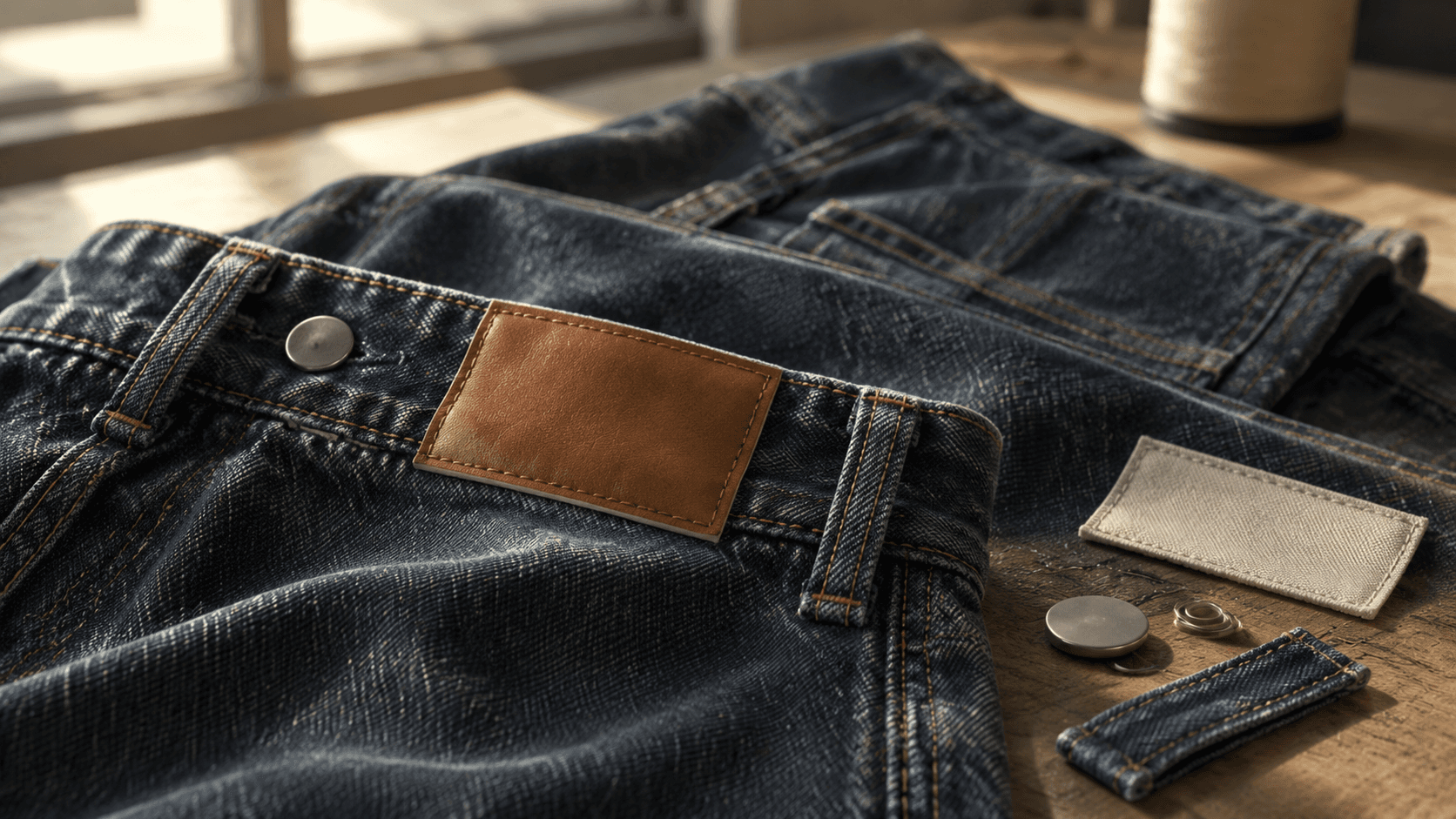
The easiest thing to confuse between available stock and custom production isn't whether the styles look alike, but "which elements are already locked in." With available stock, what can usually be changed is only size and quantity—brand labels, trims, and wash effects follow the existing product configuration. With custom production, everything from fit, fabric, and wash to main label, care label, leather patch, and buttons must be confirmed item by item. Figure out which element you need to change first, and the path becomes clear.
First, align what you're comparing
When comparing an available style with a custom development reference, first confirm whether the two are the same type of thing. Product cards on available-stock pages correspond to existing products—sizes, inventory, and minimum order quantities are subject to the current ordering window. Custom development references show a design direction; they do not represent stocked goods, and reference images cannot be used as a basis for deliverable quantities or composition. Comparing price or lead time across these two types of pages will not yield reliable conclusions.
| Conditions to confirm | Available stock | Custom |
|---|---|---|
| Style and sizing | Check listed styles and available sizes | Provide a size chart or key measurement points for the target market |
| Trims and brand labels | Follow existing product configuration | Provide artwork, dimensions, colors, placement, and quantity requirements |
| Quantity rules | Subject to the MOQ shown in the current ordering window | Some reference styles indicate 30 pcs per style MOQ; others to be confirmed |
| Lead time basis | Actual inventory and shipping conditions must be verified | 3-day sampling and bulk within 30 days depending on volume are arrangements subject to order confirmation |
Trims and brand labels: the available-stock path usually has no room for adjustment
If the purchasing goal is quick replenishment or a trial run, the key checks on the available-stock path are whether sizes are complete, whether quantities suffice, and whether shipping conditions are met. Brand labels, hangtags, and packaging for available-stock items are generally delivered per existing configuration and should not be assumed replaceable. If you need custom main labels, care labels, leather patches, or packaging, move to custom communication and provide usable artwork, dimensions, colors, placement, and quantity requirements, while confirming authorization for pattern and trademark use. Trims and packaging may carry separate quantities, costs, and lead times—these must be confirmed item by item at quotation and cannot be assumed free or customizable at any quantity.
Quantity rules cannot be applied across paths
For available stock, MOQ is based on the current detail page and ordering window; some items support 1-piece minimums and mixed sizes within the same style. Some custom development references indicate 30 pcs per style MOQ, but this is not a blanket commitment for all styles, fabrics, or colors. When verifying, ask clearly whether MOQ is calculated by style, color, or size, and whether piece counts for different styles are combined by default. For smaller quantities, first discuss available-stock trial sales or sample development, then verify whether custom arrangements can be made—rather than negotiating custom pricing based on available-stock quantities.
Lead times: distinguish the milestones
Same-day shipping for available stock and bulk delivery within 30 days for custom orders are both arrangements subject to confirmation with the specific order—they cannot be rewritten as global same-day delivery or guaranteed 30-day arrival. The 3-day sampling timeline assumes materials, documentation, and processes are all in place; the starting milestone for bulk lead time should be written into the order. Shipping does not equal arrival—transit and customs clearance times are calculated separately. When requesting a quote or placing an order, provide the destination country, postal code, estimated quantity, and desired arrival date to facilitate logistics planning.
Choose your path based on project status
If the style is already decided and you only want to replenish existing sizes and quantities, start with available-stock verification. If you need to change fit, fabric, wash, or brand labels, enter custom development communication, starting from reference styles to confirm feasibility, materials, processes, pricing, and scheduling. The checkpoints differ between the two paths—you cannot use one path's inventory figures to judge the other's deliverable capacity. There is only one next step: list the details that must be kept and those that must be changed, then verify each item against the table above.