Custom Denim Shirt Fabric Selection and How to Choose Denim Weight for Jeans: Two Judgments Often Confused
Custom denim shirt development and jeans development are often discussed within the same fabric logic, but shirts emphasize drape, structure, and shape after washing, while jeans emphasize the match between fabric weight and silhouette. This article explains the verifiable documentation items for each category separately and clarifies the boundary between images, reference styles, and confirmed specifications. It is suitable for brands and buyers who are preparing custom development materials or verifying quotation bases.
Shirt fabric depends on drape and structure, while jeans weight depends on season and silhouette; neither can be judged from images alone and must be based on confirmed specifications or sample records.
In this article
Shirt fabric: first confirm how it behaves once made into a shirtJeans weight: numbers need to be considered together with fit and seasonBoundaries shared by both categories: images, reference styles and confirmed specificationsWhat to prepare before requesting a quote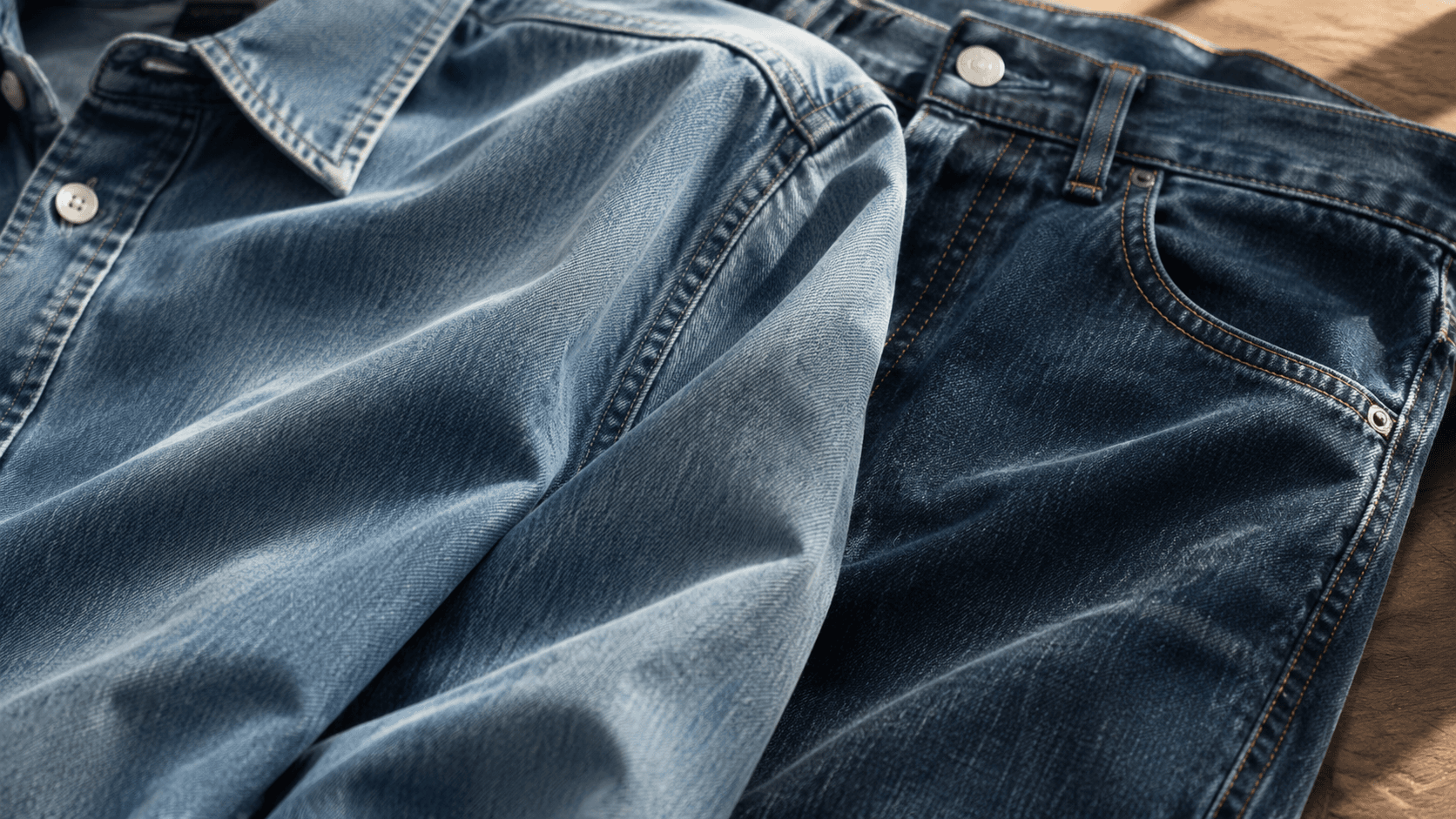
Custom denim shirt fabric selection and how to choose denim fabric weight for jeans are often treated as the same type of question. In actual communication, these are two different judgments: for shirts, you need to confirm how the fabric drapes and holds structure in the finished garment; for jeans, you first need to confirm how the fabric weight matches the season and the fit. Neither can be read from a single reference image.
Shirt fabric: first confirm how it behaves once made into a shirt
Fabric discussions for denim shirts can start with the use case: layering or outerwear, whether a certain degree of crispness is needed, and how much structure should remain after washing. These requirements directly affect fabric selection, but the specific composition, weight, yarn and weave should come from confirmed product specifications, fabric documentation or sample garment records.
Reference images can indicate color direction and overall appearance, but cannot serve as a basis for composition or weight. Lighting and screens affect color judgment, and the same image may display differently on different devices. When wash effects need to be confirmed, target color samples or reference garments should be provided, and sample garments should be used to confirm key areas and details that need to be preserved.
If brand labels, care labels or leather patches are involved, artwork, dimensions, colors, placement and quantity requirements need to be confirmed separately, and authorization for pattern and trademark use should also be stated in the documentation. For this part, see Distinguishing reference images from confirmation pieces before customizing denim trims and brand labels, where the distinction between reference images and confirmation pieces applies to shirt projects as well.
Jeans weight: numbers need to be considered together with fit and season
How to choose denim fabric weight for jeans depends on the wearing season, fit structure and wearing habits of the target market. The weight number alone cannot determine whether a pair of jeans is suitable; it needs to be checked together with fabric handfeel, stretch requirements and wash methods.
For styles requiring stretch, stretch, recovery and finished garment fit requirements should be confirmed at the same time; for non-stretch or crisp styles, the discussion should also consider activity levels and size design. Fabric substitution may affect color, wash, handfeel and finished garment dimensions; after any change, sample garments should be re-checked and cannot be directly treated as an equivalent replacement.
Accurate parameters for weight and composition should likewise come from confirmed product specifications, fabric documentation or sample garment records. Photos cannot be used to judge weight, and reference styles cannot be used to directly derive accurate parameters. If the customer provides a reference sample, they can describe the handfeel and thickness direction they most want to preserve, and then the sales team can check available fabrics.
Boundaries shared by both categories: images, reference styles and confirmed specifications
Whether for shirts or jeans, model shots, flat-lay photos and detail images in the custom product gallery are used to help communicate style structure and design direction. These images do not prove that physical samples exist, that stock is available, that real customers exist or that mass production capability is in place, nor can they be used to derive accurate composition and process parameters.
When customers ask about the final finished product effect, they should be guided to confirm sample garments, colors, dimensions and process records. Image display cannot replace formal specifications and sample garment confirmation. Factory real-shot materials can be used to illustrate the corresponding scenarios, but whichever stage is shown should correspond to real materials from that stage; design illustrations must not be presented as real-shot evidence.
Custom development proceeds through five stages: requirement communication, solution confirmation, sampling and review, sample approval and production, and quality inspection, packaging and shipping. Each stage should have a clear confirmation result, and after revisions the latest version should be synchronized to avoid inconsistency between drawings, sample garments and orders. The difference between shirts and jeans lies in what needs to be checked at each point, but the confirmation milestones are the same.
What to prepare before requesting a quote
To facilitate accurate quoting, first inquiries are recommended to include: reference style number or product link, design drawings or reference samples, target market and men's/women's positioning, estimated quantity per style, color and size breakdown, fabric or handfeel requirements, wash effects, brand label and packaging requirements, target delivery date and destination country.
For shirt projects, you can additionally state whether layering or outerwear is intended and what shape should be preserved after washing; for jeans projects, you can state the wearing season, stretch requirements and fit direction. If the information is incomplete, you can first send reference images and describe the details you most want to preserve or adjust, and then the sales team can confirm the missing items.
Stock purchasing and custom development are different paths. If you want quick replenishment or to test the market first, you can visit the stock denim purchasing page to check sizes, quantities, availability and shipping arrangements style by style; if you need to change fit, fabric, wash, trims or brand labels, then enter custom communication. Custom development reference styles show design direction and do not mean stock is prepared.
Final confirmation of fabric and weight rests on sample garments and confirmed specifications. Images, reference styles and verbal descriptions can serve as a starting point for communication, but cannot replace these two items.