
How to communicate denim shrinkage: first distinguish before-wash vs. after-wash, then discuss tolerance
Shrinkage disagreements are rarely about the numbers themselves—most often the two sides are not talking about the same thing. This article is for brands and buyers, explaining how to link before-wash/after-wash states, measurement methods, tolerances, and sample approval into one verifiable communication chain, so bulk production and samples don't tell different stories.
The core of shrinkage communication is unified test criteria: specify before-wash or after-wash measurement, test methods, and tolerance ranges, with approved samples as the final reference for verification.
In this article
Pre-wash vs. post-wash: the two states can't be mixedTest basis: method, measurement points, toleranceSample approval: tying shrinkage to the specific styleConditions to include in quotes and orders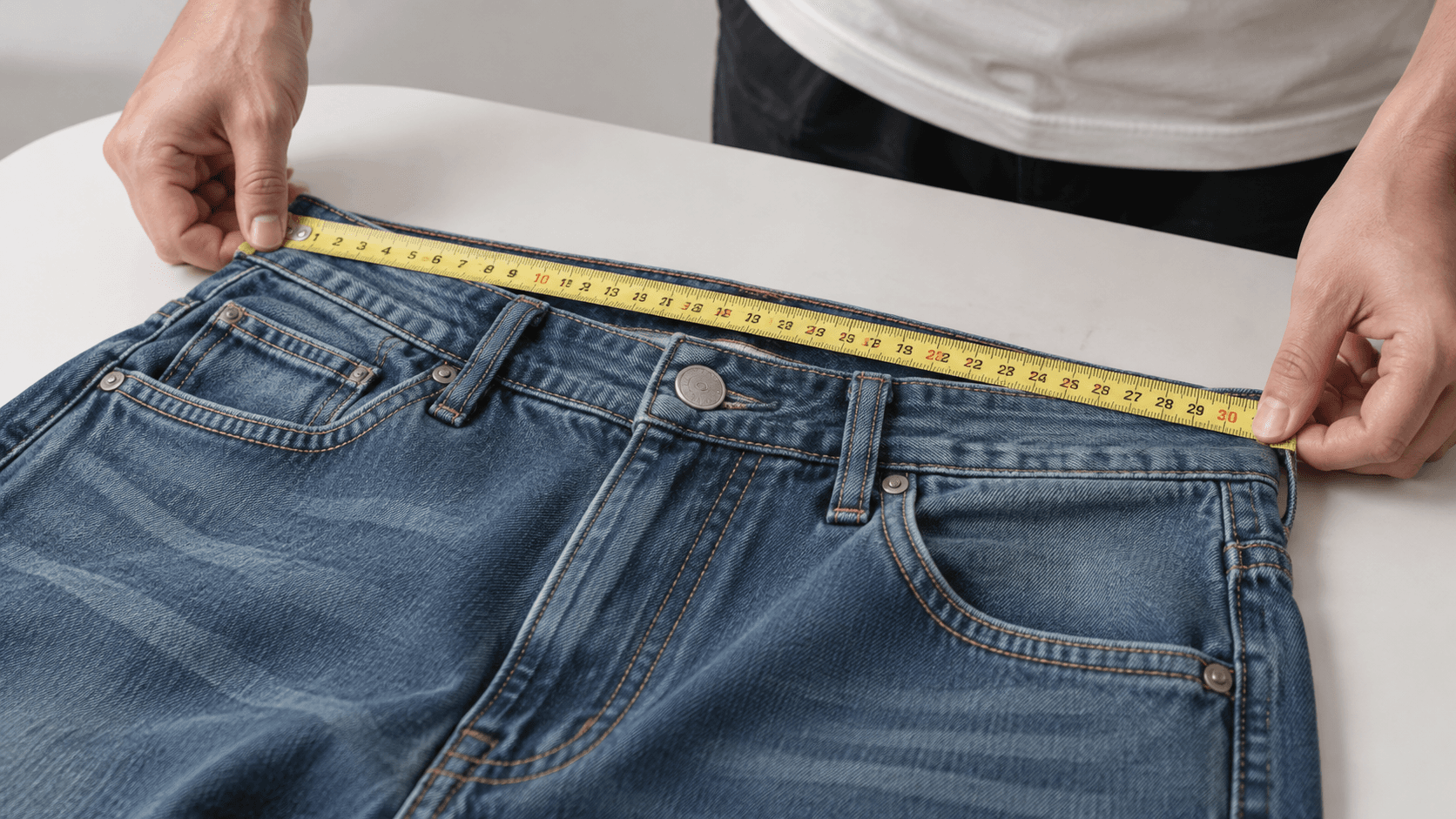
Shrinkage disagreements usually aren't about how far apart the numbers are — they're about the two sides talking about different states. The buyer judges by the hand feel of a washed garment, while the factory replies with pre-wash fabric data. Neither is wrong, but they don't match.
The first step in communication isn't asking for a percentage — it's writing the measurement state clearly first. With the same batch of denim fabric, waist and inseam measurements can differ noticeably before and after washing. Without specifying pre-wash or post-wash, no shrinkage figure can be verified.
Pre-wash vs. post-wash: the two states can't be mixed
Fabric shrinkage and garment shrinkage are not the same thing. Fabric testing typically involves sampling, washing, and drying according to a specified method, then measuring dimensional change; garments are affected by pattern, construction, and wash processes, so the same fabric can behave differently across styles.
So before discussing numbers, confirm: is this figure a fabric test result or a post-wash garment measurement? If it's a garment, also confirm the wash method, washing conditions, and measurement points. Treating fabric data directly as a garment commitment is a common mismatch.
Test basis: method, measurement points, tolerance
Shrinkage has no universal value independent of method. At minimum, confirm: the referenced test method or mutually agreed procedure, which points are measured (waist, hip, inseam, thigh, etc.), washing and drying conditions, and the tolerance range.
Tolerance is the item most often skipped in communication. Writing only "shrinkage 3%" without a tolerance leaves no basis for judgment when actual measurement comes in at 3.5%. Tolerance should be written into the specification confirmation stage by both parties, stating whether it applies per piece or as a batch average.
| Discussion item | What needs to be specified | Consequence if omitted |
|---|---|---|
| Measurement state | Pre-wash or post-wash, plus wash conditions | Figures cannot be verified |
| Measurement points | Specific points such as waist, inseam, and how they are measured | Each side measures differently; results don't match |
| Test method | Referenced method or mutually agreed procedure | Data source cannot be determined |
| Tolerance | Per piece or batch average, plus/minus direction | No basis for handling measured deviations |
Sample approval: tying shrinkage to the specific style
Even after fabric parameters are confirmed, you still need to return to the sample garment. During sampling, key measurement points should be recorded before and after washing, and during review a distinction should be made between must-fix issues and acceptable differences. Sample approval means both parties have settled on the production reference — including the dimensional state corresponding to shrinkage behavior.
If the fabric is changed or the wash process adjusted during development, shrinkage behavior may change, and sample measurements should be re-verified rather than carrying over the original data. In custom development, this especially needs to be written into version records.
For how to record and verify pre-wash and post-wash measurements, see the measurement definitions in "How to communicate denim shrinkage? Start by separating pre-wash/post-wash and test basis." If sample and bulk production already diverge, "Shrinkage disagreements: where does bulk-to-sample consistency start to drift?" offers an approach to tracing back from confirmation checkpoints.
Conditions to include in quotes and orders
Shrinkage-related communication outcomes should ultimately land in the specification version and order terms, not just stay in chat logs. If the quoting stage involves wash and fabric options, it should also state whether shrinkage testing is included in sampling or QC arrangements, and who provides the test records.
For custom projects, the scope of solution discussion can be explored through denim custom development and private label services; when production stages and wash arrangements need confirmation, see the denim manufacturing process. For available styles, shrinkage behavior is subject to the current product page and the actual received batch, and is not to be conflated with custom commitments.
The boundary for judgment: shrinkage is conditional data — without measurement state, points, method, and tolerance, it cannot serve as an acceptance basis. The next step is simply to confirm one thing — under which state were the shrinkage figures in your hands measured?