
Denim Shrinkage Communication: Three Commonly Overlooked Confirmation Items
Shrinkage is not a single number but a conditional value tied to fabric, wash, and measurement method. Aimed at brands and buyers, this article explains three items that should be confirmed when communicating shrinkage: pre-wash and post-wash states, testing and measurement methods, and re-verification requirements after fabric or wash changes, along with practical check methods.
Shrinkage communication should distinguish pre-wash and post-wash states, test methods, and fabric lots; actual sample measurements are more reliable than verbal promises, and both parties should record measurement specifications in writing. Field order: title, summary, metaTitle, metaDescription, tldr; SEO fields must be independently concise.
In this article
Before wash or after wash—agree on the state firstDifferent test methods mean numbers cannot be compared directlyChange the fabric or the wash—recheck the shrinkage conclusionActionable checklist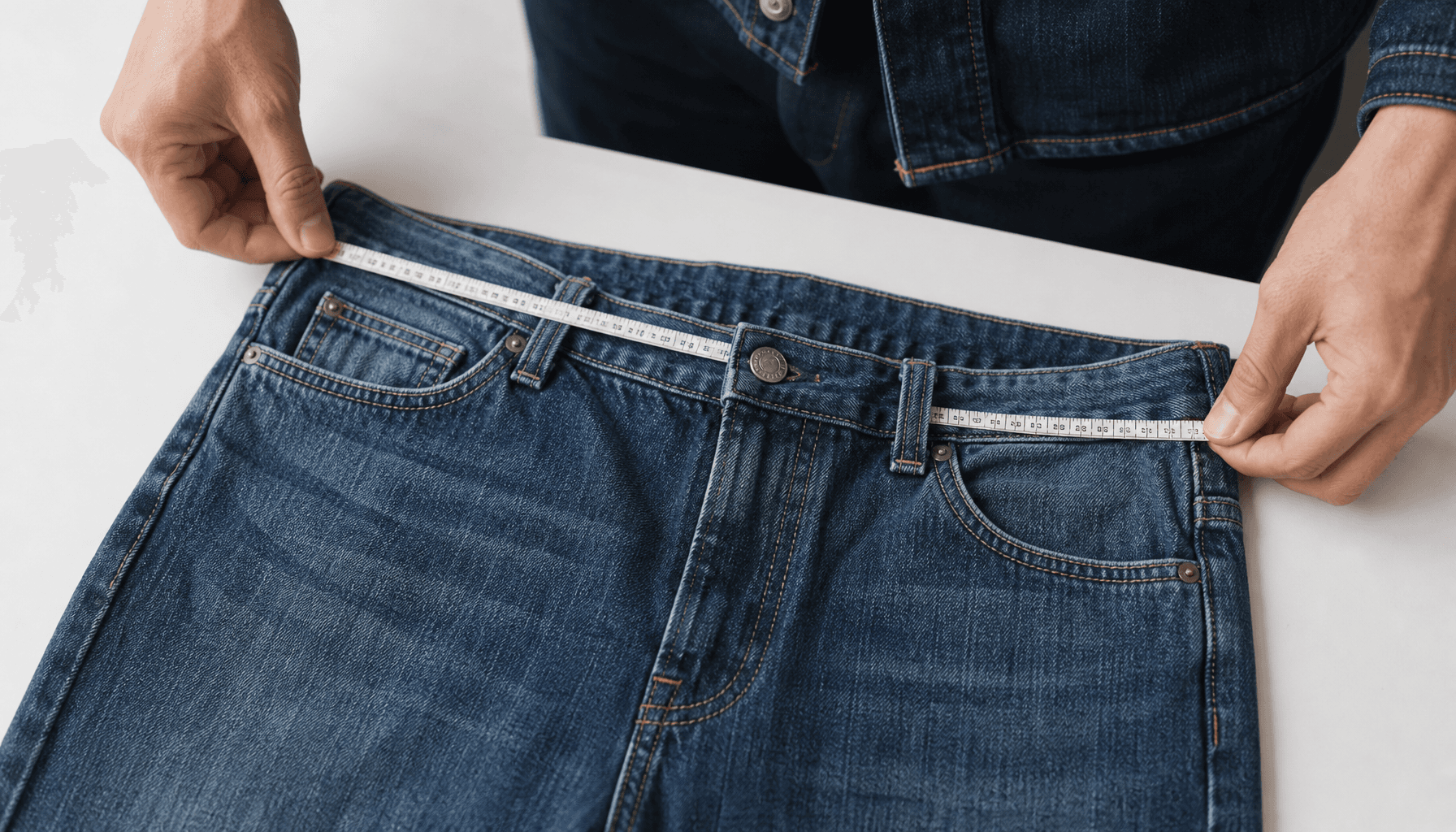
How to communicate denim shrinkage: a common approach is to simply ask, "How much does it shrink?" This question is hard to answer in one sentence, because shrinkage is not a fixed attribute—it is a conditional value that depends on the fabric, the wash state, and the measurement method. Clarify these points first, and the conversation has somewhere to land.
Before wash or after wash—agree on the state first
The numerator and denominator of shrinkage depend on which state is being measured. For the same piece of denim, measuring the waist before wash and after wash, then dividing the difference by the before-wash measurement—that is one round of shrinkage change. If one party reports before-wash data while the other compares it against after-wash garments, the conclusions will inevitably fail to match.
In communication, you can agree directly: use the garment after a specified wash as the baseline, measure key points such as waist, hip, and inseam, and record both before-wash and after-wash values. When reviewing samples, mark these measurement points on photos—this is easier to verify than saying "it shrinks a bit" verbally.
Different test methods mean numbers cannot be compared directly
Shrinkage can come from fabric testing or from actual measurements of garments after washing. The two are not on the same basis: fabric testing typically treats sample cloth under specified washing conditions, while garment measurement is affected by sewing structure, wash process, and measurement location. Without stating the test conditions, two numbers cannot be compared side by side.
When parameters need to be fixed, both parties should explicitly record washing temperature, number of cycles, drying method, and measurement points—rather than independently filling in an industry-generic value. Only test conditions confirmed by process personnel are suitable for writing into specification documents.
Change the fabric or the wash—recheck the shrinkage conclusion
Switching fabric or changing the wash can both alter garment dimensional behavior. Even with the same fiber content label, different yarns, weaves, or finishes may produce different shrinkage behavior. After a change, rechecking sample garment dimensions is more reliable than carrying over data from the previous version.
In custom development, fit, fabric, and wash are usually confirmed together at the proposal stage. You can refer to the communication path for custom denim development and OEM/ODM services, and keep shrinkage criteria and sample confirmation in the same round of records.
Actionable checklist
- Agree on measurement state: before wash, after wash, or after a specified wash.
- Specify measurement points and tools: waist, hip, inseam, thigh—using a soft tape or flat measurement.
- Record test conditions: washing method, number of cycles, drying method, confirmed by process personnel.
- Keep sample versions: label each revision with a version number, and tie shrinkage data to the specific sample.
- Recheck upon change: after any change in fabric, wash, or structure, re-measure and update records.
Existing information is insufficient to provide a uniform shrinkage value, and it is not advisable to directly apply one sample's measured results to other fabrics or washes. What can be done is to clearly document the state, method, and version, so the next check has a traceable basis.
If you are compiling shrinkage communication records for a particular pair of jeans, start with the sample's before-wash and after-wash measurement sheet—list the two sets of values for key points side by side, then confirm with the business team whether the test conditions are consistent.