Custom Black Denim Jacket with Flap Chest Pockets: Check These Four Items Before Sampling
This article is for brands and buyers who need custom men's black denim jackets, outlining the sequence of checks from reference images to sampling. The focus is not on style descriptions, but on the order of size inputs, pending fabric items, sample confirmation scope, and brand details. Readers can use this to prepare a requirement brief that supports quoting and sampling, reducing repeated revisions caused by incomplete information.
Before developing a custom men's black denim jacket with flap chest pockets, confirm shoulder width, chest circumference, body length, sleeve length, and layering thickness, and verify movement allowance through a sample; fabric composition, weight, and post-wash changes remain to be confirmed.
In this article
Provide sizes first, then discuss fitFabric and wash: what can be decided now, what must wait for the sampleFor the sample round, the confirmation scope must be clearly definedDo not wait until before bulk production to raise brand detailsInformation needed before quotation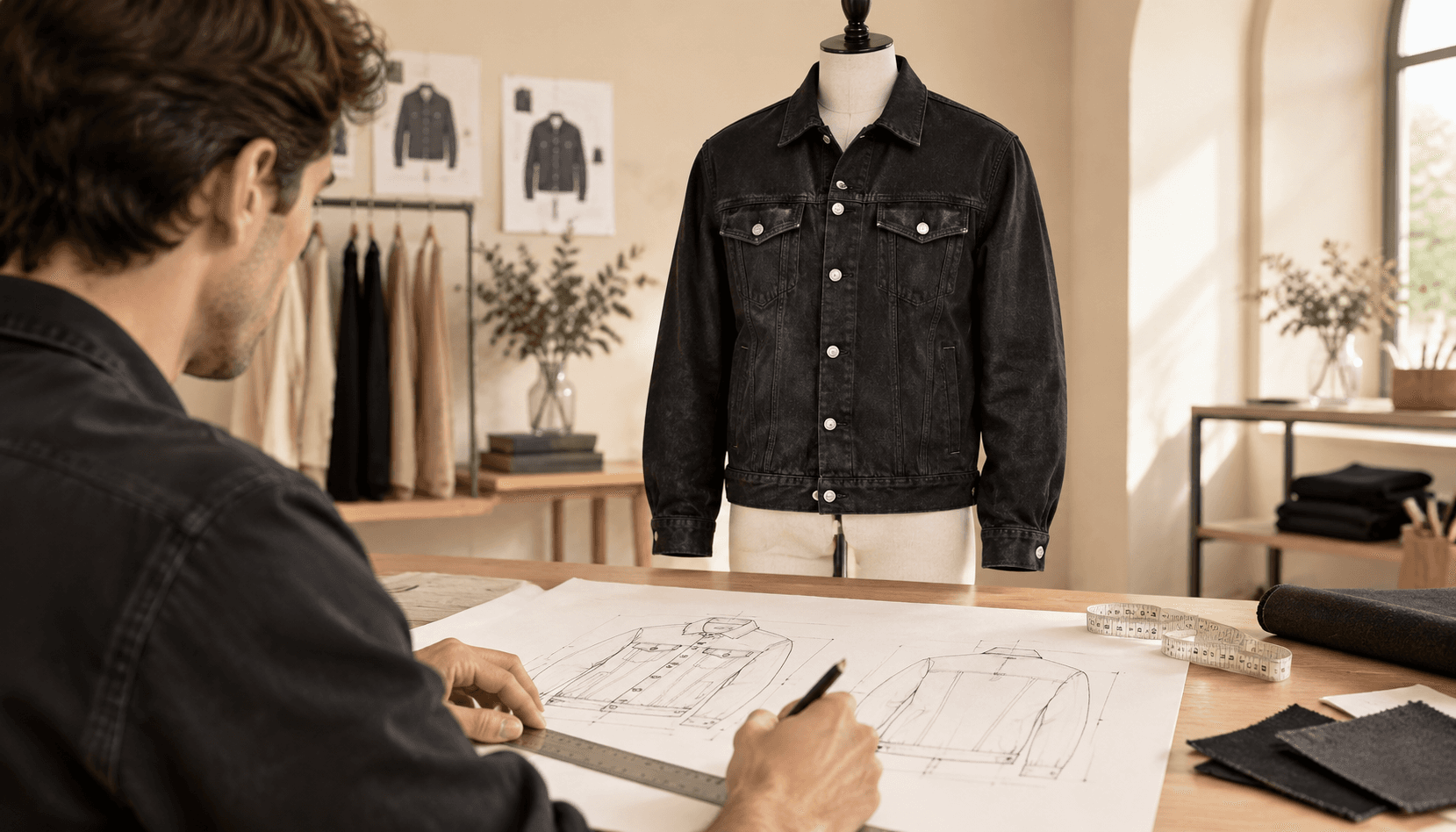
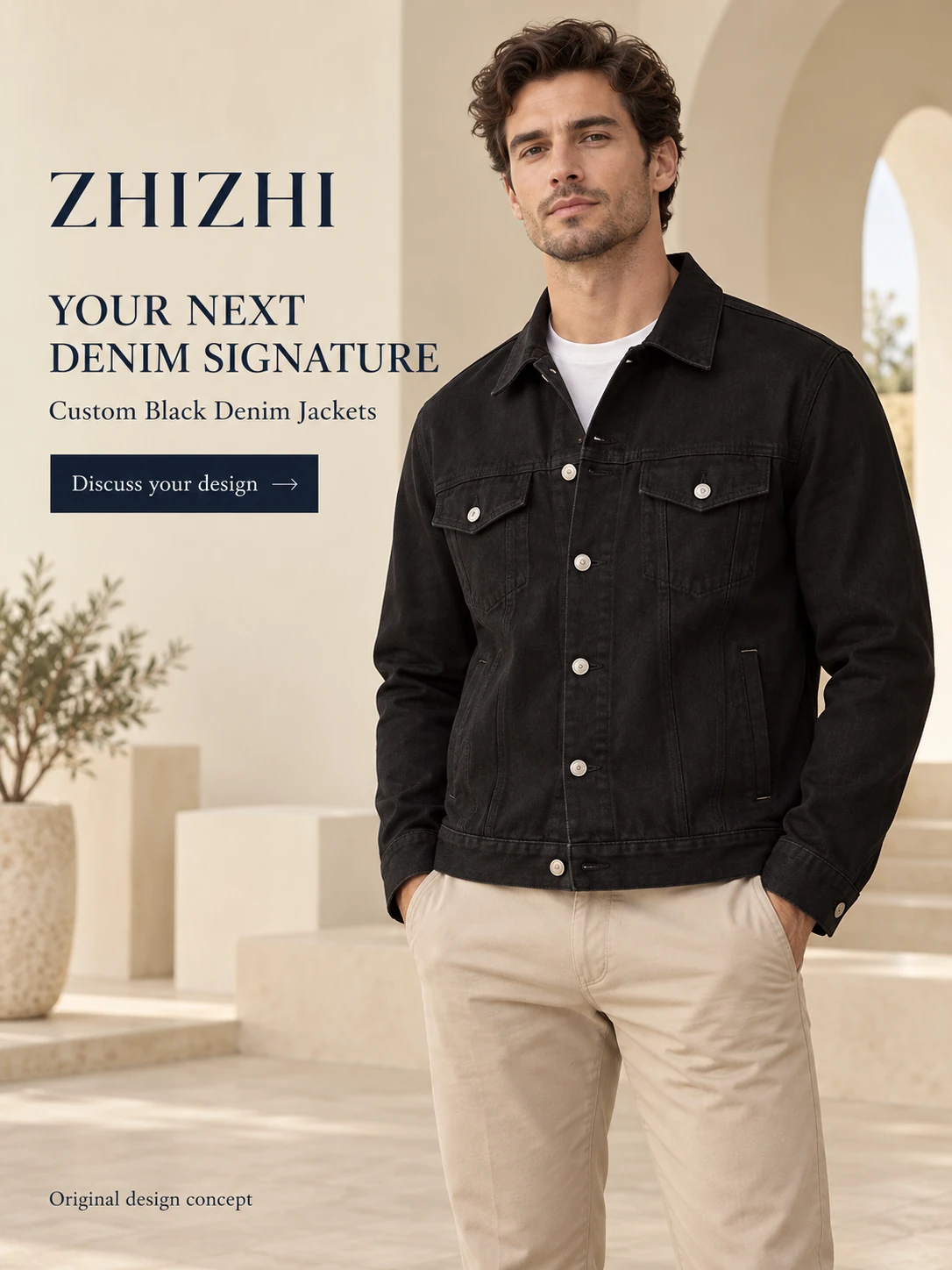
When developing a men's black flap chest pocket denim jacket, the first thing is not choosing fabric, but separating size inputs from pending items. This reference style is a design rendering, not an existing sample or in-stock photo; the metal button placket on the lapel, double flap chest pockets, lower welt pockets, long sleeves with button-tab cuffs, and straight hem are appearance and structure descriptions and cannot be used to infer fabric composition, weight, or after-wash performance.
Provide sizes first, then discuss fit
Jacket fit development has a similar starting point to men's denim fit development: key body measurements must come from the target market or try-on feedback and cannot be inferred from model photos. Shoulder width, chest circumference, body length, sleeve length, and inner layer thickness need to be provided—this determines how much movement allowance to leave. For example, whether the inner layer is a thin T-shirt or a thick sweatshirt changes the room for movement in a garment with the same chest circumference.
The size chart should specify the measuring method, units, and whether measurements are before or after washing. When this information is missing, sampling can only produce a silhouette sample based on reference proportions and cannot be used as the bulk production size standard.
Fabric and wash: what can be decided now, what must wait for the sample
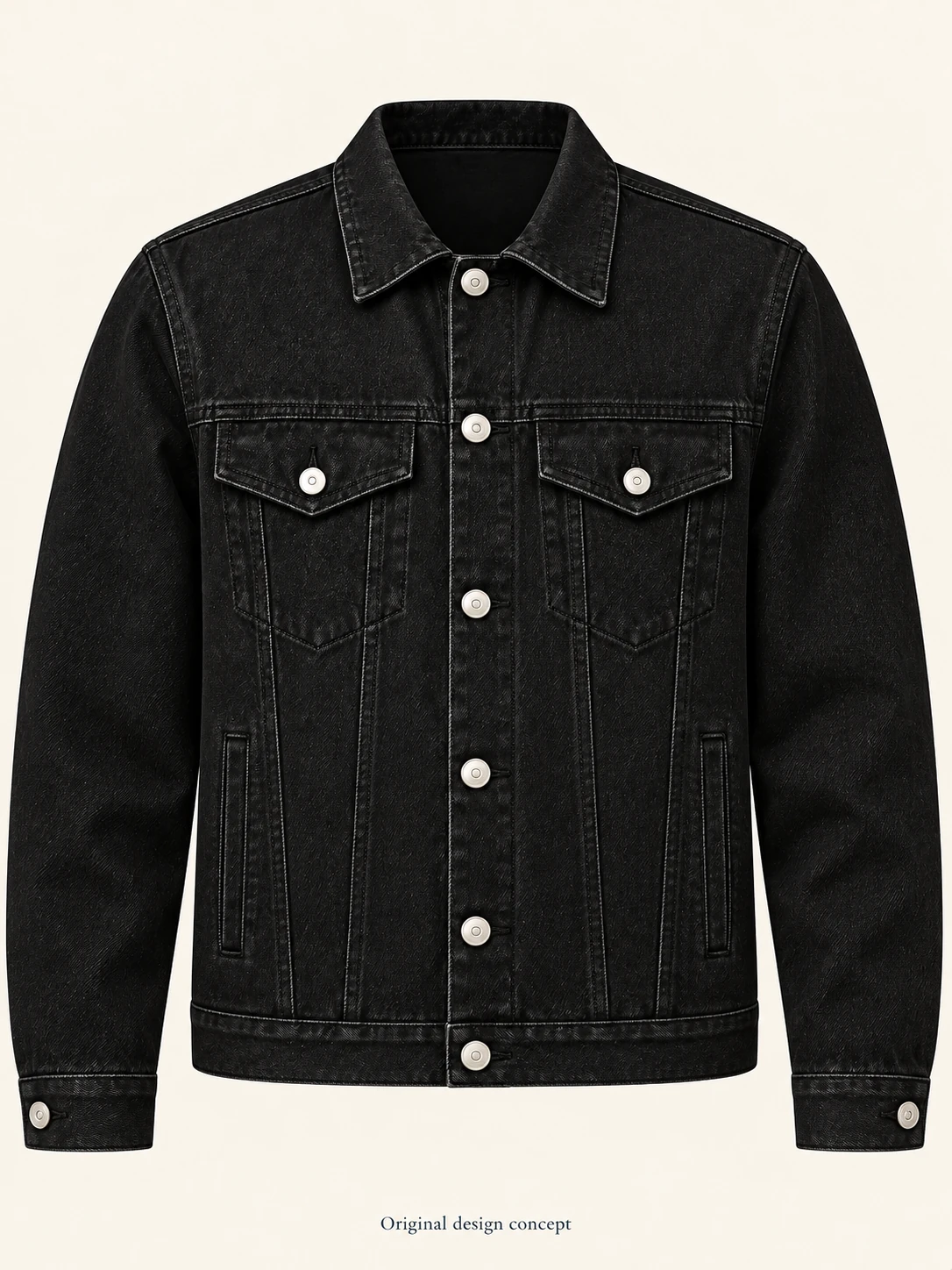
The wash effect of a black denim jacket is clearly affected by the fabric. Reference images can show "black is required, flap chest pockets are required," but cannot specify composition, weight, or whether the fabric will fade or shrink after washing. These parameters need to be obtained from confirmed fabric data or sample records.
If the customer wants to maintain a relatively deep black after washing, or needs whiskering, abrasion, or other treatments, the key areas and details to preserve should be specified before sampling. Reference images are affected by lighting and screens and cannot serve as a color difference standard; the same wash treatment on different fabrics may present different hand feel and color.
For the sample round, the confirmation scope must be clearly defined
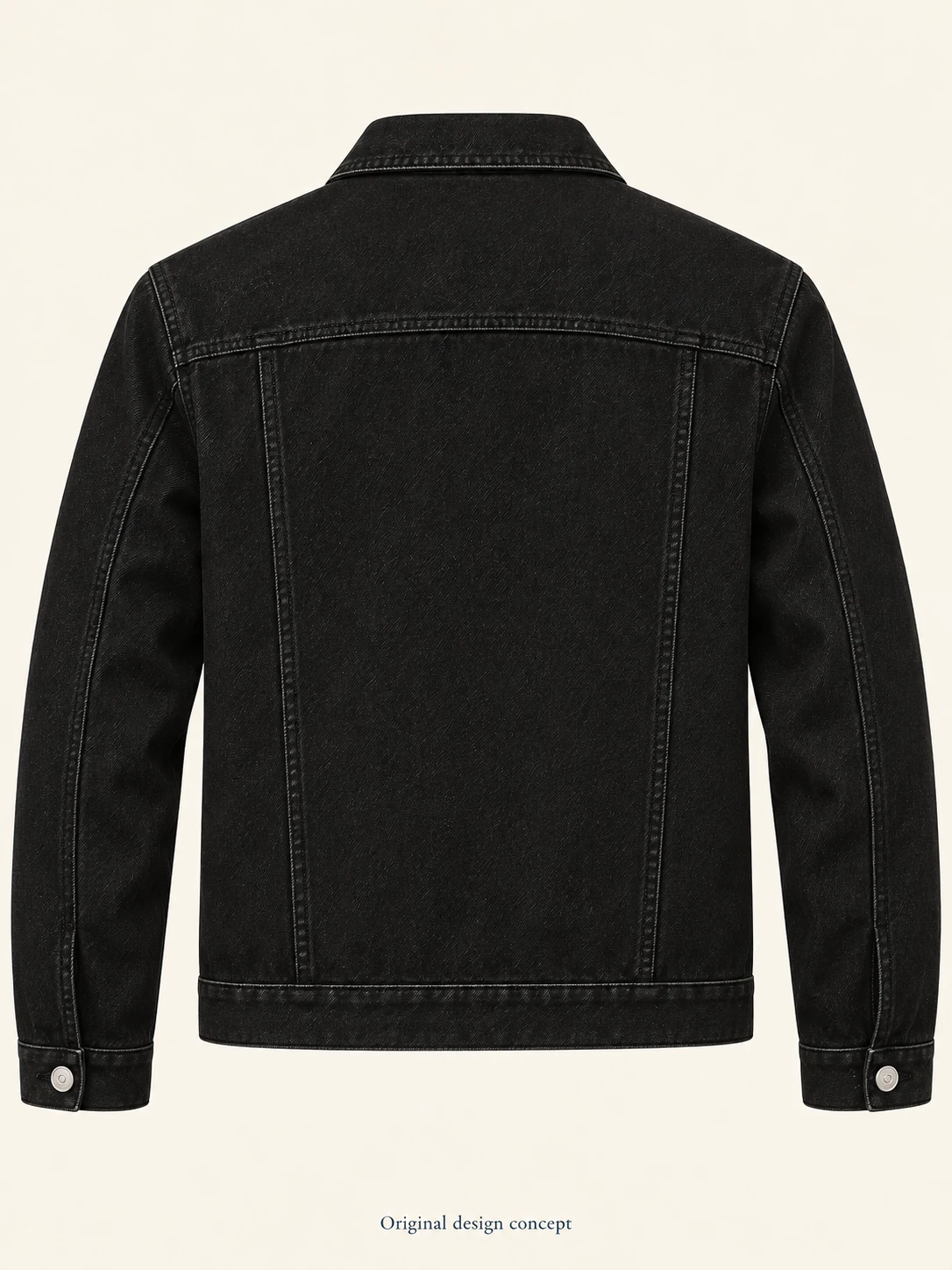
At the sampling stage, it is recommended to consolidate feedback on fit, sizes, fabric hand feel, color and wash, stitching, trims, and label placement in one go, marking areas with photos. If this sample round mainly reviews silhouette and movement allowance, record the silhouette judgment first; if fabric and wash also need to be confirmed at the same time, the relevant materials should be prepared together.
Keep version numbers and confirmation records for each round of revisions. Sample approval means both parties have established the production reference; it does not mean unconfirmed details can be decided by the factory on its own. Sample fees, revision rounds, and shipping arrangements are subject to the project agreement.
Do not wait until before bulk production to raise brand details
Main labels, care labels, leather patches, buttons, rivets, zippers, hangtags, and packaging may have separate quantity, cost, and lead time requirements. The customer should provide artwork, dimensions, colors, placement, and quantities, and confirm authorization for pattern and trademark use. If these are raised only after sampling, they may affect trim procurement and scheduling.
If other jacket styles are being developed at the same time, you can refer to the communication approach in custom development of men's blue lapel denim jackets, but sizes and fabrics for each style must be confirmed separately. For the customization process and stage breakdown, see denim custom development and private label services.
Information needed before quotation
Quotation communication needs to take into account style, quantity, fabric, wash, trims, brand customization, packaging, and delivery requirements. To facilitate an accurate quotation, it is recommended to provide: reference style number or link, design drawing or reference sample, target market, estimated quantity per style, color and size ratio, fabric or hand feel requirements, wash effect, brand label and packaging requirements, target delivery date, and destination country.
MOQ is confirmed by proposal; 30 pieces per style is not treated as a uniform commitment for all styles, fabrics, or colors. Lead times need to be confirmed against the specific order; communication stating 3 days for sampling and delivery within 30 days for bulk depending on volume cannot be directly understood as unconditionally applicable to all styles.
At the current stage, it is recommended to first organize shoulder width, chest circumference, body length, sleeve length, and inner layer thickness into a size input sheet and send it with reference images and quantities to the sales team for review. Fabric composition, weight, and after-wash changes should be listed as items to be confirmed and reviewed together at the sample stage.