
How Should Custom Denim Shorts Details Be Decided? Start by Clarifying How to Choose a Denim Customization Factory
A sourcing decision guide for brands and buyers. The differences between custom denim shorts and long pants come down to inseam length, leg opening, wash placement, and trim usage, and these details directly affect pricing and sampling rounds. When choosing a factory, first confirm whether they can replicate your sample garment or tech pack, then check minimum order quantity, size-mix rules, and label authorization requirements. This article organizes the fields and confirmation points that need to be filled in advance to help reduce back-and-forth communication.
Before customizing shorts, first clarify three details: inseam length, wash, and trims, then screen factories based on conditions such as whether they can replicate sample garments and whether they support size mixing. Do not apply in-stock pricing to custom orders.
In this article
Which details must be locked down first for custom shortsHow to choose a custom denim manufacturer: look at willingness to replicate firstWhere pricing differences come fromWhat to confirm during the sampling stageInformation to prepare for the next step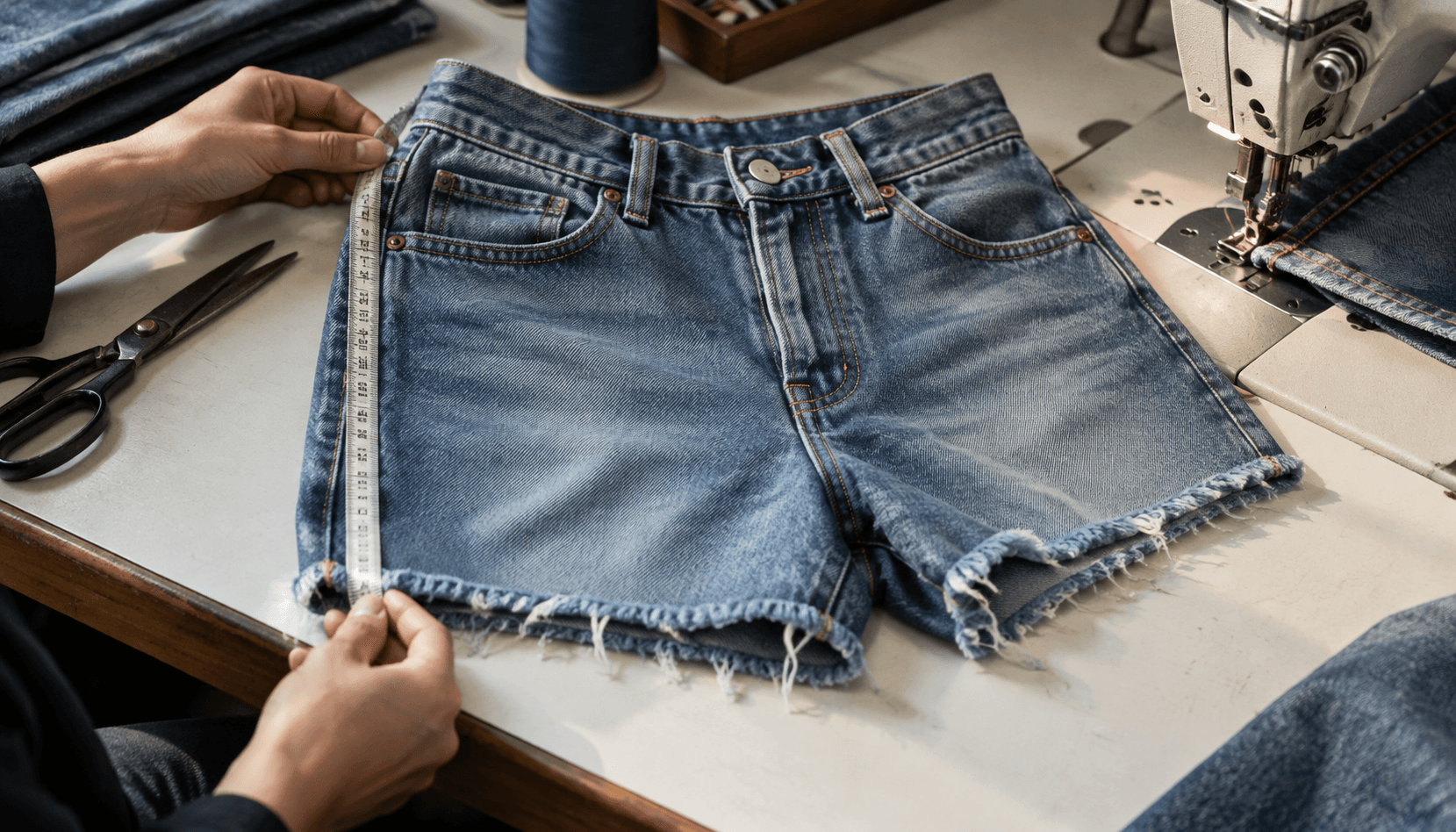
Custom denim shorts and custom denim pants are not the same thing. Inseam length, leg opening width, wash placement, and trim quantities all change, and so do pricing and the number of sampling rounds. If you only send a reference image and ask for a price, it is difficult for a factory to give you a usable number.
Which details must be locked down first for custom shorts
Inseam length is the first variable. Shorts, mid-length, and knee-length styles use different amounts of fabric and wash coverage, and the placement of whiskering, fading, and distressing must also be re-marked according to inseam length. Reference images are affected by lighting and screen display and cannot serve as an absolute color difference standard. We recommend also providing a target color swatch or reference garment.
Leg opening treatment is the second variable. Raw edge, rolled hem, and flatlock overlock differ in process steps and trim usage. For raw edge effects, you need to confirm whether the frayed length remains stable after washing. For rolled hems, you need to confirm the roll width and fixing method. These details should be written into the tech pack so there is a basis for verification during sampling.
Trims and labels are the third variable. Shorts use fewer buttons, rivets, and zippers than pants, but the requirements for main labels, care labels, leather patches, hang tags, and packaging remain the same. Customers need to provide usable artwork, dimensions, colors, placement, and quantity requirements, and confirm pattern and trademark usage authorization. Label content for different markets needs to be verified against specific requirements. Trims and packaging may have separate quantity, cost, and lead time requirements.
How to choose a custom denim manufacturer: look at willingness to replicate first
When selecting a factory, workshop size is not the first criterion. The more practical question is: are they willing to replicate based on your sample garment or tech pack? If a factory only wants to modify from their own reference styles, your fit details may be simplified.
Replication requires the factory to verify measurement methods, size units, pre-wash or post-wash state, and acceptable tolerances. Key measurement points for shorts include waist, hip, front rise, back rise, inseam, thigh, and leg opening. S, M, L labels in different markets cannot be directly treated as the same dimensions — you must communicate using specific numerical values.
MOQ also needs to be clarified item by item: is it calculated per style, per color, or per size? Some website custom development reference styles indicate an MOQ of 30 pieces per style, while MOQs for other custom styles still need to be confirmed based on the plan. The 30-piece figure cannot be treated as a universal commitment for all styles, fabrics, or colors. For available stock items, the MOQ shown on the current product page and ordering window applies. Some items support a 1-piece minimum with mixed sizes in the same style.
If quantities are small, you can first discuss available stock for test sales or sample development, then verify whether custom production can be arranged. For stock purchasing, see stock denim sourcing. If you need to modify fit, fabric, or brand labels, go through custom denim development and private label services.
Where pricing differences come from
Custom items are quoted based on requirements and do not follow stock pricing. Quotes need to account for style, quantity, fabric, wash, trims, branding customization, packaging, and delivery requirements. When comparing quotes, customers should confirm whether sample fees, trims, packaging, shipping, taxes, and other services are included. Unless confirmed in a quotation, do not assume free shipping, tax-inclusive pricing, or free sampling.
Fabric substitution may affect color, wash, hand feel, and garment dimensions. Accurate parameters such as composition, weight, yarn, and weave structure should come from confirmed product specifications, fabric documentation, or sample records — they cannot be judged from photos. For styles requiring stretch, stretch, recovery, and garment fit requirements should also be confirmed. After changing fabric, samples should be re-verified and not directly treated as equivalent substitutes.
What to confirm during the sampling stage
3-day sampling, bulk delivery within 30 days depending on order volume, and same-day dispatch for stock items — these are capabilities and arrangements that need to be confirmed against specific orders and cannot be guaranteed to apply unconditionally to all styles. Sampling requires verifying materials, documentation, and craftsmanship. Bulk production requires verifying quantity and scheduling. Stock items require verifying actual inventory and dispatch conditions. The point from which lead time is counted must be written into the order.
After receiving samples, we recommend consolidating feedback on fit, dimensions, fabric hand feel, color and wash, stitching, trims, and label placement in one go, marking areas with photos and stating the target result. Distinguish between must-change items and acceptable differences to avoid conflicting verbal feedback across multiple rounds. Keep version numbers and confirmation records for each revision round. When materials or construction change, re-check costs and timing as well.
Sample approval means both parties have confirmed the production reference. It does not mean that details the customer has not confirmed can be decided by the factory on its own. Sample fees, revision rounds, and shipping arrangements are subject to project agreements.
Information to prepare for the next step
At this stage, we recommend first putting together a quotable requirements brief that includes: reference style number or product link, shorts inseam and leg opening treatment requirements, target market and men's/women's positioning, estimated quantity per style, color and size breakdown, fabric or hand feel requirements, wash effects, brand label and packaging requirements, target lead time, and destination country. If the information is incomplete, you can start by sending reference images and noting the details you most want to keep or adjust.