
How to communicate denim shrinkage: first clarify before-wash or after-wash
When sourcing jeans, shrinkage is a parameter that is often asked about but easy to answer incorrectly. This article is written for brands, wholesalers, and buyers, explaining that when communicating shrinkage, the first step is to distinguish between before-wash and after-wash states, measurement methods, and tolerances, and to identify which information must be provided by sales or the lab and which can only be verified through sample garments.
Shrinkage cannot be reported as a single percentage; you must first specify whether it is measured before or after washing, the test method, and the tolerance range, otherwise the same batch of goods may lead to different conclusions.
In this article
First confirm the measurement state: pre-wash, post-wash, or after washingHow to set tolerances: by measurement point or overallWho defines the test method and whenWhat to include in communication recordsWhat questions can be asked right now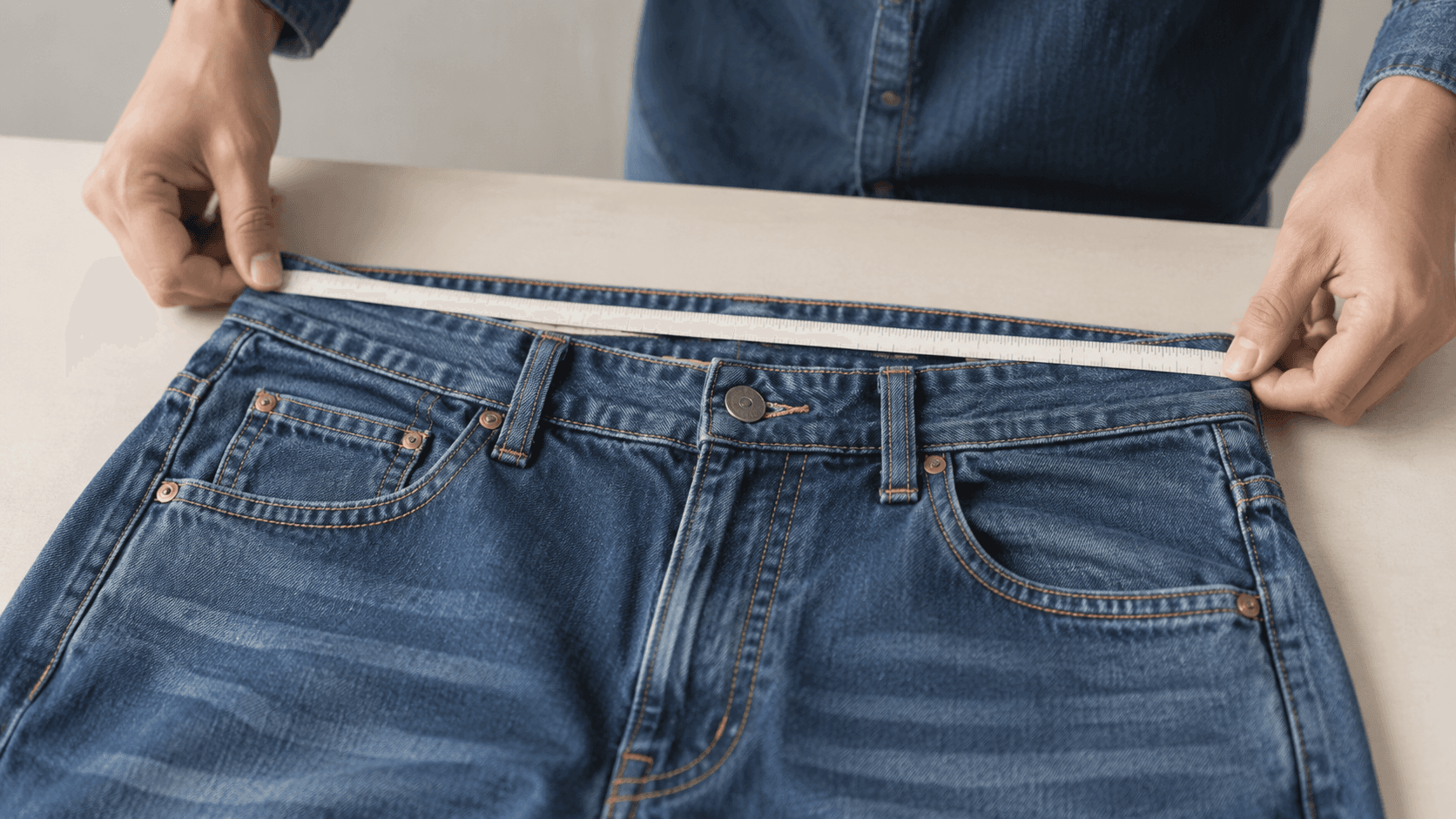
How to communicate denim shrinkage starts with one premise: are you asking about the change between pre-wash and post-wash dimensions, or about the stability of the finished garment after a specific wash process? These two questions correspond to different test methods and tolerance ranges. Discussing them together will lead to different conclusions even for the same batch.
First confirm the measurement state: pre-wash, post-wash, or after washing
Fabric may be pre-shrunk before cutting, and the finished garment will still undergo dimensional changes during the wash process. At least three stages should be clarified in communication: fabric state before cutting, garment state before washing, and garment state after washing. Writing only "shrinkage 3%" without specifying from which state to which state makes it impossible for the other party to judge whether it applies to your order.
If the customer provides test data from a fabric mill, confirm whether the data corresponds to fabric or finished garment, and whether the test method is consistent with your wash process. Fabric test results cannot be directly equated with finished garment shrinkage, because wash temperature, time, mechanical action, and drying method all affect final dimensions.
How to set tolerances: by measurement point or overall
Shrinkage tolerances are usually set separately for key measurement points, such as waist, hip, inseam, and thigh. Different points are affected differently by fabric direction and construction. Using a single overall percentage to cover all points easily leads to disputes during inspection.
In communication, it is recommended to list the pre-wash dimension, post-wash dimension, and allowable deviation for each key measurement point, and note the measurement method (e.g., flat measurement, specified location, unit). If the customer's target market has customary tolerance standards, these should be raised during sampling and confirmed by the business team as to whether they can be executed. Tolerances that have not been confirmed should not be written as absolute commitments in the order.
Who defines the test method and when
The shrinkage test method (e.g., wash program, water temperature, drying method) should be clarified during sampling and correspond to the bulk wash process. If the customer requires third-party test reports, this should be raised in advance to confirm the testing institution, costs, and responsible party. ZHIZHI does not provide any certification or fixed pass rate by default; relevant arrangements are subject to project confirmation.
During the sample stage, pre-wash and post-wash dimensional changes can be recorded as a reference for mutual confirmation. However, sample results do not mean every bulk piece will fall within the same range; during production, verification is still needed against the confirmed tolerances and inspection plan.
What to include in communication records
A usable shrinkage communication record should include at least: style number, fabric description or code, wash process description, measurement points and methods, pre-wash dimensions, post-wash dimensions, tolerance range, and test or verification date. If fabric substitution or wash adjustment is involved, sample dimensions should be re-verified rather than directly reusing old data.
Dimension measurement and shrinkage confirmation often proceed simultaneously. You can refer to the recording approach in How to Communicate Denim Shrinkage: First Distinguish Pre-Wash from Post-Wash, Then Discuss Tolerances. If the project enters the custom development stage, fabric and wash solutions will directly affect shrinkage behavior. You can learn about the scope of communication on the custom denim development and private label services page.
What questions can be asked right now
You can first confirm three things with the business team: whether the wash process for this garment has been determined; whether the shrinkage data corresponds to fabric or finished garment; and which measurement points the tolerances are set for. Only after these three questions are clearly answered does it make sense to discuss specific values. If the information is not yet complete, use actual sample measurement records as a transitional reference, and do not treat reference images or verbal statements from fabric suppliers as the final inspection basis.