
Small-Batch Private Label Denim Customization: 30-Piece MOQ and Process Checkpoints
For buyers and brand owners who need small-batch development of their own-brand denim styles. This article explains the applicable conditions for denim small-batch customization MOQs, outlines the confirmation checkpoints in the private label customization process from requirement communication to sample approval, and provides practical advice on verifying MOQ rules and quotation ranges, helping you judge when to go with available styles for market testing and when to move into custom sampling.
The 30-piece-per-style MOQ applies only to some custom development reference styles and is not a uniform threshold; the private label process requires stage-by-stage confirmation of samples and specifications, with MOQs verified separately by style, color, and size.
In this article
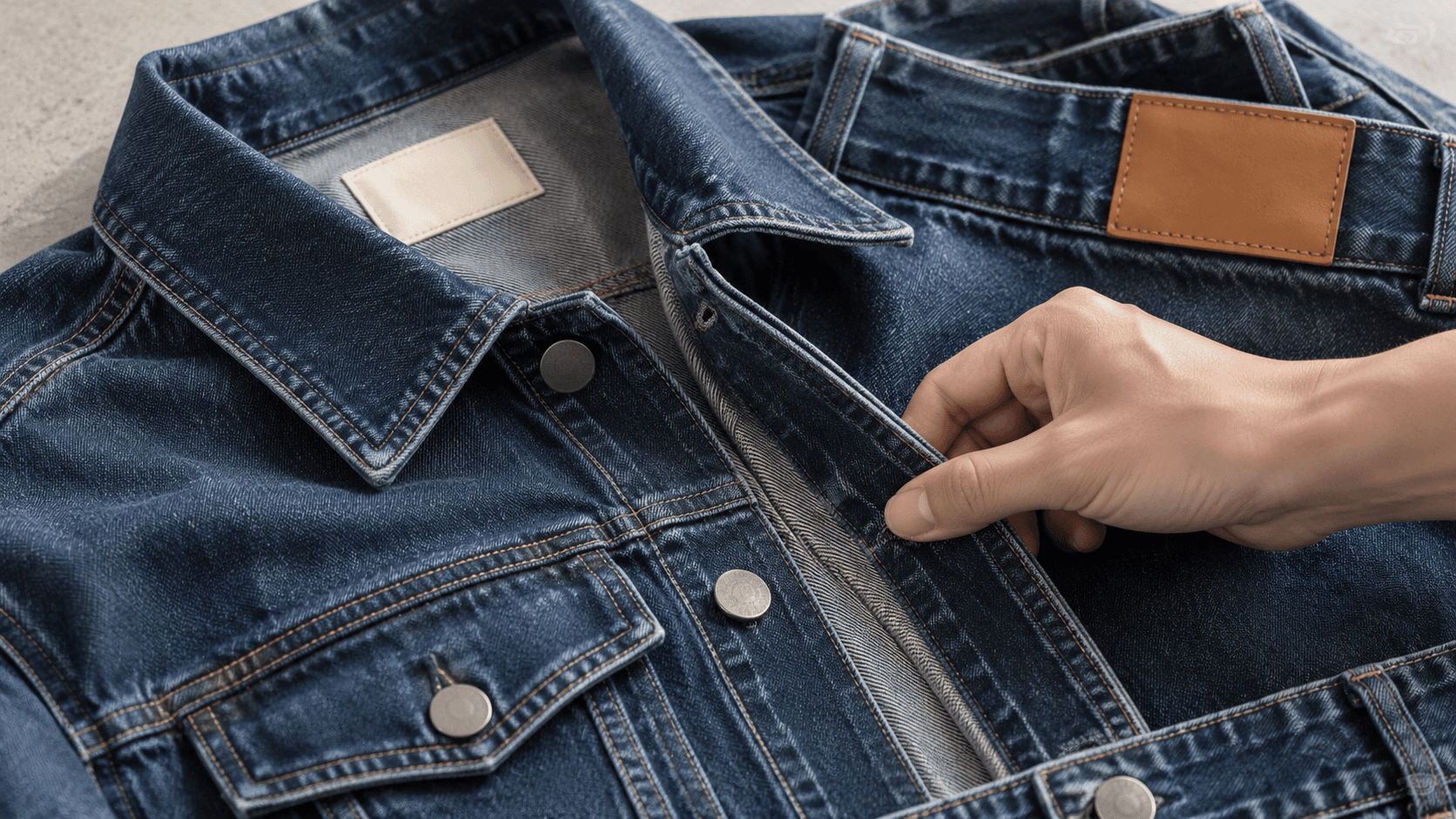
For small-batch denim OEM customization, the first thing to confirm is not the price, but the unit by which the minimum order quantity is calculated. Some custom development reference styles on the website indicate a minimum of 30 pieces per style, but this cannot be directly understood as a uniform 30 pieces for all styles, fabrics, or colors. The actual threshold for small-batch denim customization minimum order quantities needs to be verified with the business team based on the specific plan—whether the counting rule is by style, by color, or accumulated by size.
If the plan is to test the market first and then reorder, in-stock purchasing and custom development are two separate paths. For in-stock items, you can check current sizes, quantities, and shipping arrangements on the product page; if you need to modify the fit, change fabric, adjust washing, or add brand labels, that enters custom communication. Mixing the two when asking for pricing can easily lead to delivery or quantity commitments that cannot be fulfilled.
What to confirm first in the OEM process
The denim OEM customization process typically starts with requirements communication: reference style number or design drawing, target market, estimated quantity per style, color and size ratio, fabric hand feel, wash effect, brand labels and packaging requirements, target delivery date, and destination country. If materials are incomplete, you can start by sending reference images, marking the details you most want to keep and those that can be adjusted—there is no need to wait for a complete tech pack before starting.
At the plan confirmation stage, fabric, wash, trims, and brand labels should be verified item by item. Composition, weight, and stretch parameters should come from confirmed specifications or sample garment records, not from judging by images. Wash colors are subject to sample garment confirmation; reference images are affected by lighting and screens and cannot be used as an absolute color difference standard.
At the sampling and review stage, the focus is on fit, dimensions, and finished garment effect. The size chart should provide key measurement points according to the target market, noting the measuring method, unit, and whether measurements are before or after washing. Sample feedback should ideally be consolidated in one go, with photos marking the relevant areas, distinguishing between must-change items and acceptable differences, and keeping version records.
After sample approval, bulk production arrangements begin, with specifications based on the mutually confirmed version. Quality inspection and packaging requirements should be clarified before placing the order, including methods for checking dimensions, appearance, color difference, stitching, and trims. If third-party inspection or test reports are needed, these should be raised in advance and the arrangements and costs confirmed.
Operating sequence for verifying minimum order quantities
Step one: confirm whether the selected style is in-stock or a custom development reference style. Step two: ask clearly whether the minimum order quantity is calculated by style, by color, or by size, and whether piece counts from different styles can be combined. Step three: if the quantity is below the custom threshold, discuss in-stock test sales or sample development first, then verify whether small-batch customization can be arranged.
When quantities are small, prioritizing the budget on sample confirmation is more effective at reducing subsequent rework than repeated price inquiries. Sample fees, number of revisions, and shipping arrangements are subject to project agreement; whether the quotation includes sample fees, trims, packaging, and transportation also needs to be confirmed item by item in the quotation.
Judgment boundaries
The 30-piece-per-style minimum order applies only to some custom development reference styles and cannot serve as a uniform commitment for all denim OEM orders. Minimum order quantities, quotations, and delivery times all vary with style, fabric, craftsmanship, and scheduling. Before obtaining written confirmation, it is not advisable to estimate bulk prices or arrival times based on reference style page information. To move forward, you can first organize the reference style, estimated quantity, and target delivery date, and verify the currently executable minimum order rules through the on-site inquiry form or online customer service.